



In South Africa, a ceiling light with a motion sensor can feel like a small luxury that quietly makes everyday life easier, safer and more energy-efficient. Whether you’re coming home late in Joburg with your hands full of groceries, or heading down a dark passage in a Cape Town winter power dip, having the light switch itself on for you is one of those “how did we live without this?” upgrades.
At Future Light, we’ve watched more and more customers swap old bulkheads and naked bulbs for sleek motion-sensor ceiling fittings in garages, passages, sculleries and even kids’ rooms. One Durban customer told us their new sensor ceiling light “stopped the midnight Lego landmines” because the light now comes on gently as soon as little feet hit the floor. That’s exactly the kind of everyday magic we love helping you create.
Key Takeaways
- Ceiling lights with motion sensors boost safety and convenience by turning on automatically when you enter a space.
- They can dramatically cut wasted electricity in low-traffic areas like passages, garages and storerooms.
- Choosing the right sensor type, beam angle, CCT and IP rating is crucial for South African homes and weather.
- Installation can be simple for retrofit swaps, but outdoor and high-ceiling jobs are best left to a qualified electrician.
- Pairing motion-sensor ceiling lights with other smart, LED and solar options gives you a load-shedding-resilient home.
- Fine-tuning sensitivity and time-delay settings avoids nuisance switching from pets, braai smoke or passing traffic.
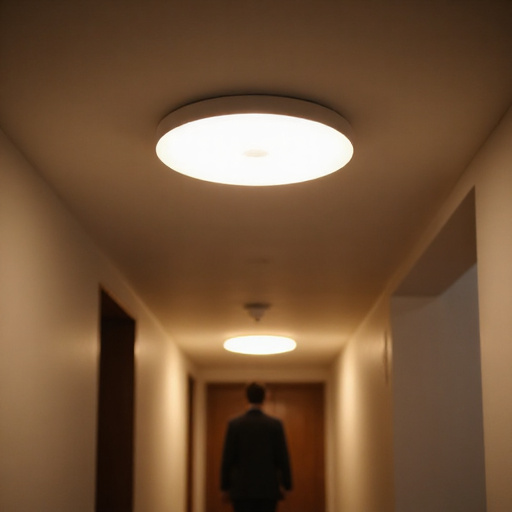
How Ceiling Lights With Motion Sensors Actually Work (And Why They Shine In South African Homes)
Understanding Motion Sensors: PIR vs Microwave vs Dual-Tech
At the heart of every ceiling light with a motion sensor is a tiny “watchman” that detects movement and tells the light to switch on. In SA homes, you’ll mostly see three types: PIR (passive infrared), microwave, and dual-tech. Think of PIR like a springbok’s eye – it notices changes in heat patterns, such as a person walking into a cooler passage. Microwave is more like sonar; it sends out waves and reads the bounce-back, which makes it better at “seeing” through certain materials and around slight obstacles – handy in cluttered garages or storerooms in places like Pretoria or Port Elizabeth.
We once helped a Cape Town customer who had installed a PIR-sensor ceiling fitting in a cold, draughty garage. Every gust of wind through the slightly open door threw the temperature patterns off, so the light sometimes failed to pick them up. We swapped them to a microwave-based sensor fitting from our garage lighting collection and the problem disappeared. For deeper technical dives, resources like the International Energy Agency’s building efficiency guides show just how much impact sensor-based control can have in real buildings.
In practice, PIR is ideal for indoor areas with clear lines of sight – your passage, small bathroom, or scullery. Microwave is better where obstacles and doors might block line of sight, or where you have high ceilings. Dual-tech sensors combine both, using PIR to avoid false triggers and microwave to “fill in the gaps”. Match your sensor choice with the right wattage (often 10–24W LED for homes), a beam angle around 110–160° for ceiling fittings, and an IP rating of IP20 for dry indoor rooms or IP44–IP65 for bathrooms and semi-outdoor spots.
Micro Summary: Choose PIR for simple indoor spaces, microwave for tricky layouts, and dual-tech when you need maximum reliability with minimal false triggers.

Where Motion-Sensor Ceiling Lights Make The Biggest Difference In Your Home
The beauty of a ceiling light with a motion sensor is that it quietly solves those “short-use” lighting moments where flipping a switch feels like overkill – passages, stairwells, guest loos, pantries and garages. In a multi-level home in Durban North, a customer told us their stair lights used to be left on all evening “just in case”, because no one wanted to navigate the steps in the dark. Once they installed sensor-based ceiling downlights, the lights now follow you as you move, like a friendly indoor version of streetlights.
We often recommend motion-sensor fittings when we’re helping customers plan layered lighting using guides like our ultimate indoor lighting guide for South African homes or our specific passageway lighting collection. Internationally, organisations such as the U.S. Department of Energy highlight occupancy sensors as one of the simplest energy-saving add-ons you can make in residential and commercial spaces.
From a technical perspective, you’ll want a neutral-white CCT in the 4000K range for functional spaces like passages and garages, or warmer 3000K for bedrooms and nurseries where you don’t want harsh light in the middle of the night. CRI of 80+ is typically enough in transitional zones, though 90+ is nice for kitchens and living areas. Aim for a wide beam angle (120°) for passages and a slightly narrower one for focused areas like stairs. For outdoor entries in rainy Cape Town or windy Gqeberha, choose IP44–IP65 moisture-protected fittings.
Micro Summary: Install motion-sensor ceiling lights in “in-and-out” spaces like passages, stairs, garages and guest loos to save electricity and add effortless safety.

Balancing Ambience, Security And Energy Savings
A good motion-sensor ceiling light does three things well: it makes you feel safer, it keeps your home welcoming, and it quietly trims your electricity bill. Think of it like a helpful neighbour who turns on the porch light when they see you coming home. In high-crime areas across South Africa, from Randburg to Mitchells Plain, having your entrance and internal circulation spaces light up automatically can be a powerful deterrent and peace-of-mind boost.
We had a customer in Bloemfontein pair LED motion ceiling fittings at their back door with outdoor security lighting chosen from our LED motion sensor floodlights collection and broader outdoor lighting range. They followed best-practice guidance similar to that on the Crime Stats SA and community safety organisations, using light to remove hiding spots while avoiding harsh glare into neighbours’ yards.
On the energy side, a 15–20W LED ceiling fitting with a sensor often replaces a 60–100W incandescent or 36W fluorescent – and then runs far less because it isn’t left on by mistake. Set your time delay to 30–90 seconds for passages and 3–10 minutes for areas like garages or laundries where you may pause. Combine this with efficient LED bulbs elsewhere and smart use of day/night timer switches, and you can shave a noticeable chunk off your monthly bill even before you consider solar.
Micro Summary: With the right settings, sensor ceiling lights strike a sweet spot between safety, welcoming ambience and lower electricity use in SA homes.

When you match the right sensor type, placement and colour temperature to each space, your ceiling lights quietly work in the background to keep your South African home safer, softer and more efficient.
| Feature | Indoor Passage Ceiling Light With Motion Sensor | Outdoor Entrance Ceiling Light With Motion Sensor |
|---|---|---|
| Typical CCT | 3000–4000K (warm to neutral) | 4000–6500K (neutral to cool for security) |
| Recommended IP Rating | IP20–IP44 | IP44–IP65 (for rain and coastal air) |
| Wattage Range | 10–18W LED | 15–24W LED |
| Ideal Beam Angle | 110–140° for wide coverage | 90–120° to reduce spill to neighbours |
| Sensor Type | PIR or dual-tech | PIR or microwave depending on layout |
Choosing, Installing And Fine-Tuning Your Motion-Sensor Ceiling Light
Key Specs To Look For: CCT, CRI, Wattage, IP And Settings
Shopping for a ceiling light with a motion sensor can feel a bit like browsing biltong – lots of options, but once you know what you like, choices become easy. For South African homes, start by thinking about colour temperature (CCT). Warm white (around 3000K) is gentle for bedrooms and lounge-adjacent passages, while neutral white (4000K) is brilliant in sculleries, offices and garages. CRI of 80+ is fine for most circulation areas; go 90+ if the same room doubles as a task space, like a study nook in a passage in Stellenbosch.
In our product support chats, we often help customers match wattage and beam angle using references like our ultimate outdoor lighting guide or more focused guides such as the LED strip lighting how-to. International benchmarks like the Illuminating Engineering Society recommend typical lux levels for areas like corridors and stairs, and we translate those into simple wattage and placement rules for SA homes.
For a standard 2.4–2.7 m ceiling, a 12–18W LED ceiling fitting with 1000–1600 lumens and a 120° beam angle usually gives a pleasant, non-glaring pool of light. Check the IP rating: IP20 is fine for dry indoor, IP44–IP65 for bathrooms, stoep ceilings and coastal homes from East London to Hermanus. Finally, make sure the sensor gives you adjustment for time delay, sensitivity and sometimes lux (daylight) level – this lets you avoid the light switching on unnecessarily in bright daytime conditions.
Micro Summary: Choose your motion-sensor ceiling light by matching CCT, wattage, beam angle and IP rating to the room, and insist on adjustable sensor settings for proper fine-tuning.

Installation: Retrofit Swaps, New Builds And Safety
In many cases, installing a motion-sensor ceiling light is as straightforward as replacing an existing bulkhead or batten fitting – same wiring, smarter “brain”. For simple dry indoor areas, confident DIYers sometimes do this themselves, but in South Africa, electrical regulations and insurance considerations make it wise to call in a qualified electrician, especially in older homes in areas like Observatory or Morningside where wiring can be… creative.
We’ve had customers in Cape Town convert their entire townhouse passage and garage lighting over a weekend with a friendly electrician, using a mix of motion-sensor ceiling fittings and fixed downlights from our LED downlights collection and recessed LED lights range. Guidance from safety-focused sites such as Electrical Safety First (UK-based but broadly relevant) mirrors our own: isolate power at the DB, test before touching, and box all junctions properly.
From a technical side, most motion-sensor ceiling fittings are 230V and wire directly to live, neutral and earth. Some models have a separate switched live, or need neutral permanently present. In bathrooms, stay within safe zones and use IP44 or higher. Outdoors or in exposed carports, consider pairing your motion-sensor ceiling light with weatherproof junction boxes and UV-resistant wiring cable to extend lifespan.
Micro Summary: Many motion-sensor ceiling lights are simple retrofits, but always respect SA electrical safety, use proper enclosures, and call a pro for bathrooms, outdoor areas or old wiring.

Fine-Tuning Sensor Settings And Integrating With The Rest Of Your Lighting
Out of the box, many motion-sensor ceiling lights are set to fairly sensitive, long time delays – great for showrooms, not always ideal in real homes with pets, braais and passing cars. Fine-tuning is a bit like tuning a guitar: small tweaks on sensitivity, time and lux settings can transform how the light feels in daily use. In windy Cape Town suburbs, for example, we often recommend dropping sensitivity slightly if the sensor can “see” moving trees through windows.
One Pretoria family phoned us because their new sensor light in the passage was coming on every time their cat wandered past. Guided by our team and their electrician, they lowered the sensitivity and angled the sensor head slightly away from the floor, and suddenly the light only responded to adults and kids. We often pair such tweaks with broader advice from our indoor lighting guide and from specialised resources like our blog on smart lighting integration in South African homes.
To integrate motion-sensor ceiling fittings into a holistic lighting plan, use them mainly for “circulation and safety” layers. In living rooms, pair them with dimmable pendants from our LED pendant lights or designer lighting collections; in kitchens, let under-counter strips from our LED strip lights range handle task lighting. For load-shedding resilience, add rechargeable lights or solar lights in strategic spots.
Micro Summary: Spend a few minutes adjusting sensitivity, time and lux, and your motion-sensor ceiling lights will feel “just right” while fitting neatly into your broader lighting and load-shedding strategy.

When you treat motion-sensor ceiling lights as part of a bigger lighting “team” – tuned to your habits, pets and load-shedding realities – they quietly do their job while your home simply feels easier to live in.
Quick Checklist
- Decide where a ceiling light with motion sensor will help most: passages, stairs, garages, entrances or bathrooms.
- Choose the right CCT (3000K warm or 4000K neutral) and IP rating (IP20 indoors, IP44–IP65 for damp/outdoor areas).
- Check sensor adjustability for time delay, sensitivity and lux level so you can fine-tune after installation.
- Plan how the sensor light will layer with your other fittings (pendants, strips, wall lights and emergency options).
- Book a qualified electrician, especially for bathrooms, outdoor ceilings or older homes with unknown wiring.
If you’re ready to make your after-dark life easier, have a look at our motion-friendly collection, pick a favourite hero item, and then dive into a related blog to round out your home’s security lighting plan.
Frequently Asked Questions
Q1: Are ceiling lights with motion sensors worth it for South African homes?
Yes. In South African homes, ceiling lights with motion sensors are especially useful in passages, stairwells, garages, entrances and guest bathrooms. They reduce the risk of trips and falls, help with security by lighting up when someone approaches, and cut electricity waste from lights being left on. With LED technology, the fittings themselves are efficient, and the sensor ensures they only run when needed – a double win for your Eskom bill.
Q2: Will a motion-sensor ceiling light work during load shedding?
A standard motion-sensor ceiling light won’t work during load shedding unless it is connected to a backup supply like an inverter, UPS or generator. Many South African homeowners run key circuits (passages, stairs, entrances) through a small backup system so that motion-sensor lights and a few essentials stay on. You can also complement them with rechargeable lights, solar lights and power banks for portable options.
Q3: How do I stop my motion-sensor ceiling light from triggering for pets?
To reduce triggers from cats or small dogs, lower the sensor sensitivity and, where possible, slightly angle the sensor’s detection zone above floor level. Many fittings let you adjust a small dial inside the housing to change range and sensitivity. Installing the light at a recommended height (usually 2.4–3 m) and ensuring it’s not pointing directly at pet routes (like the couch or pet bed) also helps. If you have very active pets, consider a dual-tech sensor or using motion on circulation spaces only, not main lounges.
Q4: What IP rating do I need for a bathroom or outdoor ceiling?
For standard dry indoor ceilings, IP20 is usually fine. For bathrooms, we typically recommend IP44 or higher, especially if the fitting is near a shower or in a moisture-prone area. For outdoor or semi-outdoor ceilings – like a stoep in Durban or a carport in Cape Town – IP44–IP65 is ideal, depending on direct exposure to rain and coastal air. Higher IP ratings provide better resistance to dust and water, extending the life of both the LED and the motion sensor.
Q5: Can I install a motion-sensor ceiling light myself?
Technically, many ceiling lights with motion sensors use the same 230V connections as a normal fitting and are straightforward to wire. However, for safety, insurance compliance and adherence to South African wiring regulations, we strongly recommend using a qualified electrician, particularly for bathrooms, outdoor spots, older homes, and anywhere a new circuit or junction box is required. A pro will also position the sensor correctly and test settings with you.
Q6: What colour temperature (CCT) should I choose?
For soft, cosy spaces like bedroom passages or stairwells near living areas, 2700–3000K warm white tends to feel comfortable at night. For more functional zones like garages, sculleries, home offices and main passages, 4000K neutral white offers clearer visibility without the harshness of 6500K daylight. Many South African homes use a mix: warmer light in relaxation areas and neutral white in circulation and work zones.
Q7: How much energy can I save with motion-sensor ceiling lights?
Energy savings come from two angles: LEDs use far less power than traditional bulbs, and the motion sensor ensures they are off when the space is empty. Swapping a 60–100W incandescent or 36W fluorescent for a 12–18W LED sensor fitting can cut wattage by 50–80%, and in spaces where lights used to burn for hours unnecessarily, total kWh consumption can drop dramatically. Over a year, several sensor-controlled fittings in low-traffic areas can shave a noticeable amount off your bill.
Q8: Will motion-sensor ceiling lights improve home security?
They can contribute significantly to a layered security approach. A motion-sensor ceiling light at entrances, in garages and in internal routes (like the passage from bedrooms to the front door) means you never walk into a dark area unexpectedly. Combined with outdoor motion sensor floodlights and thoughtful placement from our outdoor lighting collection, they help deter intruders and make it easier for you and neighbours to see what’s going on around the property.


