

Ultimate Outdoor Lighting Guide for South African Homes
How to choose outdoor lights for a South African home
Outdoor lighting is one of those upgrades that South Africans only truly appreciate once it’s done. Suddenly you’re not fumbling for keys at the gate, the walkway feels safer, the patio becomes a proper evening space, and your home looks ten times more welcoming from the street.
And in our local context — with coastal air in places like Cape Town and Durban, dusty Highveld winds, summer storms, and load-shedding realities — outdoor lighting isn’t just about “pretty”. It’s about durability, safety, smart power use, and choosing fittings that won’t give up after one winter.
In this guide, we’ll break down the main types of outdoor lights used in South African homes, how to choose the right IP rating and materials for your area, where to place lights for the biggest impact, and which features are genuinely worth paying for.
Why Outdoor Lighting Matters in South African Homes
Key Takeaways
- Outdoor lighting improves safety, security, and everyday convenience — especially at gates, steps, and pathways.
- In South Africa, choosing the right IP rating and corrosion-resistant materials is crucial for long-term durability.
- Layered outdoor lighting (path + wall + feature + security) looks better and works better than one bright floodlight.
- LED and solar options reduce running costs and pair well with backup power during load-shedding.
Outdoor lighting does two jobs at once: it makes your property safer and more functional, and it makes your home look more “finished”. Good lighting around entrances, walkways, and entertaining areas helps prevent trips and falls, makes visitors feel welcome, and gives you better visibility when you’re coming home at night.
It also plays a big role in security. A well-lit perimeter is a simple deterrent, and motion-sensor lighting adds a layer of awareness without needing to keep everything on all night. In many South African homes, the smartest approach is a mix of steady low-level lighting plus “pop-on” security lighting where it matters most.
Lastly, outdoor lighting extends your living space. A patio or braai area with the right wall lights and warm ambience becomes a space you actually use — not something that goes dark the moment the sun sets.

Types of Outdoor Lighting (and What Each One Is Best For)
Before you buy anything, it helps to understand the main outdoor lighting categories. Most South African homes need more than one type — because the light you want at a front door is very different to what you need on a driveway or garden path.
1. Outdoor Wall Lights
These are your workhorses: lights mounted on exterior walls, pillars, and boundary walls. They’re ideal for entrances, patios, garages, side passages, and braai areas. Some are purely decorative, while others provide strong practical light.
If you want a clean, modern look, choose wall lights that throw light downward or both up-and-down. For older homes, lantern-style wall lights can add character without looking out of place.
2. Bulkheads and Utility Lights
Bulkheads are tough and reliable. They’re perfect for passages, outside laundry areas, staff entrances, garages, and anywhere you just want a durable “switch on and go” light. They’re also a good choice for rental properties because they can take a bit of punishment.
3. Spike Lights and Garden Spots
Spike lights are brilliant for gardens because they’re easy to position and easy to adjust. Use them to wash light up a wall, highlight a feature tree, or create depth around plants and landscaping. They’re also great for creating a high-end look without massive building work.
4. Bollards and Pathway Lights
These are designed to guide people safely along pathways and driveways. The goal here isn’t to flood everything with brightness — it’s to create consistent, comfortable visibility that makes your property feel safe and well laid-out.
5. Floodlights and Security Lights
Floodlights are high-output fixtures for bigger areas like driveways, parking spaces, yard corners, workshops, and security zones. Motion-sensor versions are a popular option for South Africa: bright when needed, energy-friendly when not.
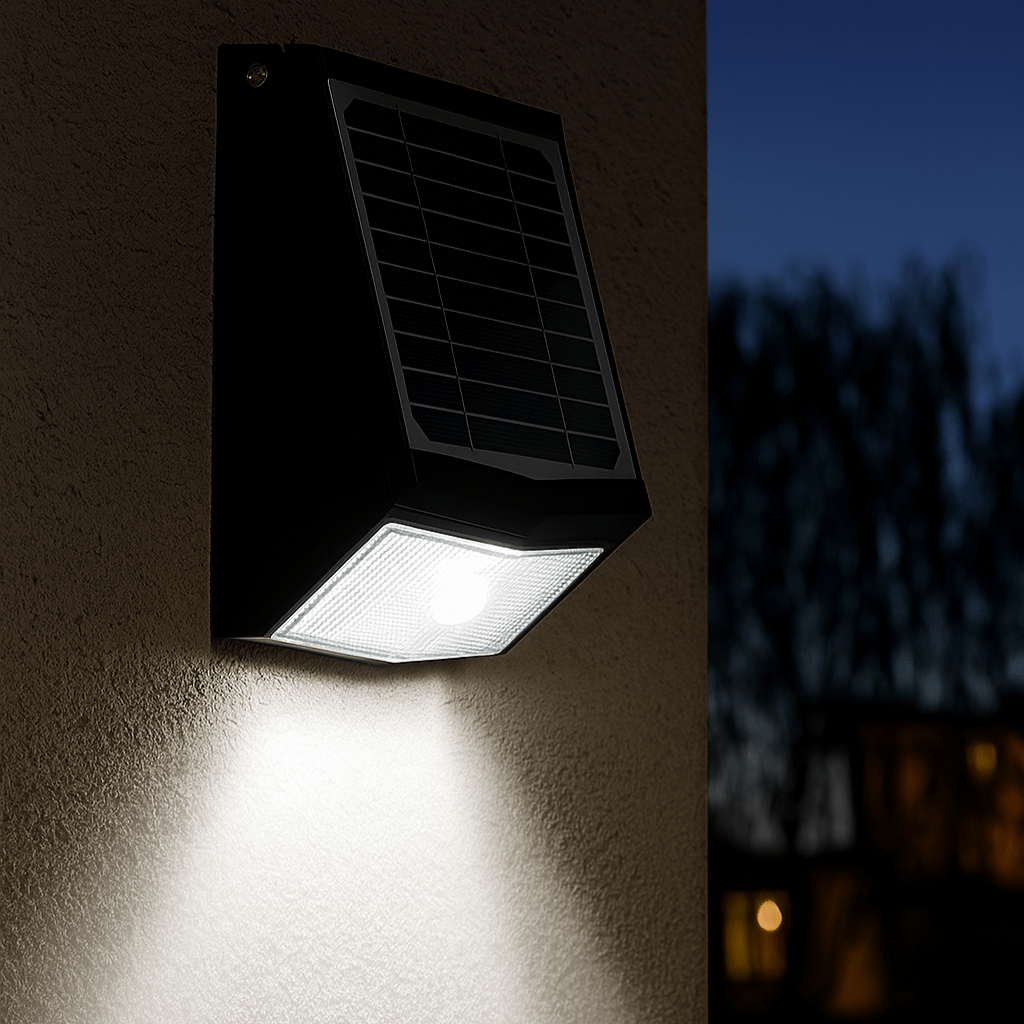
6. Solar Outdoor Lighting
Solar lights can be brilliant in the right spots — especially for pathways, garden accents, and areas where wiring would be expensive or messy. The key is to choose solar lights that suit your goal: some are “decor” level, others are genuinely bright and functional.
If you’d like to browse by category, start with the Outdoor Lights collection, then narrow down into the exact application you’re planning.

How to Choose Outdoor Lighting That Lasts (IP Ratings, Materials & Placement)
The biggest mistake people make is choosing outdoor lights purely on looks. Style matters, but outdoors is harsh — and in South Africa especially, you want to choose fittings that can handle your climate, your location, and how exposed the light will be.
Step 1: Choose the Right IP Rating
IP rating tells you how resistant a light is to dust and water. As a practical guide:
- IP20 is indoor only (not suitable outdoors).
- IP44 is suitable for sheltered outdoor areas like a covered patio wall.
- IP54 / IP55 is a solid choice for most exterior walls and semi-exposed areas.
- IP65+ is ideal for fully exposed fittings (rain, wind, spray), garden spikes, and floodlights.
If a fitting is mounted under a deep overhang and never sees rain, you can often use a lower IP rating. But for anything exposed — rather go higher. It’s cheaper than replacing fittings every year.
Step 2: Match Materials to Your Area (Coastal vs Inland)
Coastal homes (Cape Town, Durban, Garden Route, PE) have salty air that accelerates corrosion. In these areas, look for corrosion-resistant materials and finishes. Stainless steel (good quality), powder-coated aluminium, and robust outdoor plastics often outperform “pretty” mild steel.
Inland homes deal more with dust, heat, and big temperature swings. Here, sealed fittings and tough diffusers matter — and IP rating becomes your best friend.
Step 3: Choose Light Output for the Job
Not every outdoor light needs to be blinding. For pathways and patios, you often want comfortable visibility and atmosphere. For driveways and security zones, you want bright, clear light that removes hiding spots and improves camera visibility.
Step 4: Decide on Colour Temperature
Warm White creates a welcoming, premium feel at entrances and entertainment areas. Cool White is practical for side passages and utility areas. Daylight can be great for security lighting when you want crisp visibility.

Outdoor Lighting by Area (Where to Put Lights for the Biggest Impact)
If you want outdoor lighting to feel intentional (and not like a last-minute add-on), plan it by zones. Most homes have a few key areas that deserve proper lighting, and once those are right, everything else becomes easier.
Front Entrance & Porch
This is your “hello” point. Use wall lights on either side of the door if possible, or one strong fitting that lights the lock and step area. Warm White here creates a welcoming feel and makes the home look more premium.
If you have a gate and a front door, treat them as two separate zones. A well-lit gate is about safety and visibility. A well-lit door is about comfort and arrival.
Driveways & Parking Areas
Driveways need clarity, not mood. Floodlights or strong wall lights work well here, especially if you use motion sensors. If you have cameras, avoid placing lights where they shine directly into the lens — angle them to illuminate the ground and driveway edges instead.
Side Passages & Service Areas
These are often the most neglected zones — and usually the most important for safety. Bulkheads, durable wall lights, or motion-sensor wall lights work brilliantly here. Keep it practical and bright enough to remove dark corners.
Patios & Braai Areas
This is where outdoor lighting becomes lifestyle. Use wall lights for ambience, and add a stronger task light where food is prepared. If you want that “evening restaurant” feel at home, go for warm, layered light rather than a single harsh fitting.
Paths, Steps & Garden Walkways
Pathway lighting should guide people comfortably. Bollards or low-level spikes create consistency and reduce trip hazards. If you have stairs, step lighting is one of the best safety upgrades you can make — especially for older family members or guests leaving after a braai.
Garden Features & Landscaping
Garden lighting is where you can have fun. A few spikes aimed at plants, textures, or trees can make the whole property feel more expansive and high-end. Less is more: it’s better to highlight a few key features than to scatter random lights everywhere.
For outdoor layouts, a good starting point is the Garden Lights collection and the broader Outdoor Lights range, then choose by zone.

Outdoor Lighting Features That Are Actually Worth Paying For
Outdoor lighting is one area where “cheap now” can become “expensive later”. If a fitting fails after a season, you’re not only replacing the light — you’re often paying for installation again. Here are features that typically pay for themselves.
Motion Sensors (Used Properly)
Motion-sensor lighting is fantastic for side passages, garages, and security zones. The trick is placement and sensitivity: you want it to trigger reliably for people, but not all night for every cat, branch, or passing car. When dialled in, it gives you bright visibility exactly when you need it.
Quality Seals and Proper Weatherproofing
Look for well-sealed housings, quality gaskets, and fittings designed for outdoor use — especially for coastal areas. Water ingress and corrosion are the two biggest killers of outdoor lights.
Replaceable LED or Quality Integrated LED
Integrated LEDs are common and can be excellent if the fitting is well-built. For certain applications, replaceable bulbs are still a win because you can upgrade the lamp without changing the fitting. It depends on the product and placement.
Adjustable Beam (for Garden Spikes)
If you’re lighting plants or features, adjustable spikes and spots give you far more control. You can change your garden layout over time and simply aim the light differently instead of buying new fittings.
Dusk-to-Dawn Control
Photocell (dusk-to-dawn) control is brilliant for gate lights and certain perimeter zones. It keeps consistent low-level lighting without you needing to remember switches — and it’s usually cheaper to run than people expect when you’re using LEDs.

Running Costs, LED Efficiency, and Smarter Outdoor Lighting
Outdoor lighting doesn’t have to be expensive to run. The biggest shift over the last decade has been LED: better brightness, far lower wattage, and much longer lifespan. That means you can light more zones without your electricity bill doing a backflip.
A good approach is to use a mix of lighting “layers”: lower output lights for ambience and guidance (paths, patios, entrances), and higher output lights for short bursts where you want security visibility (motion floodlights).
LED also pairs better with backup solutions. If your outdoor lighting is all low-watt LED, it’s far easier to keep key areas running on an inverter or battery system during outages.

Installation, Safety & Practical Tips (Outdoor Reality Check)
Outdoor lighting is one of those areas where good installation matters as much as the product. A quality fitting installed badly will still fail. And in outdoor environments, small mistakes (like poor sealing or incorrect cable management) get punished quickly.
DIY vs Electrician
Swapping like-for-like fittings can sometimes be DIY-friendly for confident homeowners, but anything involving new wiring, underground cabling, wet zones, or DB work should be done by a qualified electrician. Outdoor electrical work needs to be properly protected and correctly sealed — especially in exposed weather conditions.
Placement and Glare
More light isn’t always better. Avoid mounting lights where they shine directly into eyes at seating height, or where they create harsh glare for drivers. Aim light at the ground, steps, and surfaces you actually need to see.
Don’t Forget Switching and Control
Plan how you’ll control zones: patio lights may need a convenient indoor switch. Security floods might be sensor-controlled. Garden lights might run on a timer. Thinking about control upfront saves you from “we never use these lights” regret later.

Outdoor Lighting and Loadshedding (Staying Lit When the Power’s Off)
Load-shedding changes how we think about outdoor lighting. The goal becomes: keep key areas functional and safe, without relying entirely on grid power. The good news is that outdoor lighting is one of the easiest areas to make “backup-friendly”.
Use Solar Where It Makes Sense
Solar works beautifully for pathways, garden edges, and certain perimeter zones — especially where wiring would be expensive. If you want solar for security, look for units designed for brightness and visibility rather than just decorative glow.
Combine LED with Backup Power
If your entrance and passage lights are LED and low wattage, they’re much easier to run from an inverter or battery system. Even a small backup setup can keep a few key lights going for hours.
Prioritise “Key Zones”
Rather than trying to keep your entire garden lit during an outage, choose the zones that matter: gate/entrance, one main passage, and the patio/braai area. This keeps your property functional and safer without draining backup power.
For backup-friendly options, browse Solar Lights and consider pairing key areas with low-watt LED fittings.

Power-cut planning
Choose the power route before the outdoor fitting
Searches about outdoor lights during power cuts point to a practical decision: the best fitting depends on whether the area can be wired, whether the light receives enough sun, and how long it needs to remain useful. Solar, mains and backup-powered LED are different routes, not interchangeable labels.
Use solar where the panel can receive useful daylight and the required output suits the application. Check the product's stated runtime and charging conditions.
For a wired entrance, patio or driveway, choose the fitting by zone, exposure, IP rating and control method. New wiring and wet-area work belong with a qualified electrician.
Low-watt LED fittings may suit an inverter or battery plan, but the backup system and circuit must be checked for the intended load. Keep the entrance, passage or patio priority clear.
A faster way to choose
Start with the outdoor zone, not the fitting
The best outside light for a front door is rarely the best light for a driveway or garden path. Match the fitting to the job first, then check the product page for its exact IP rating, power source and installation details.
| Your zone | Useful starting point | Browse |
|---|---|---|
| Entrance or porch | Outdoor wall light with comfortable, directed output | Outdoor wall lights |
| Driveway or security zone | Floodlight or sensor light aimed at the ground, not the camera | LED floodlights |
| Path, steps or planting | Low-level bollards or adjustable spike lights for consistent guidance | Garden spike lights |
| Cable-free outdoor area | Solar fitting where daylight exposure suits the product | Solar outdoor lights |
Planning help
Make a lighting shortlist from the actual outdoor zone
If you are comparing several fittings, send the zone, approximate dimensions, exposure, preferred light colour, power route and a photo where useful. That gives the team enough context to suggest a relevant collection or product path without assuming that one outdoor fitting suits every part of the property.
A practical shortlist
Four useful starting points for different homes
These are starting points, not universal answers. Open the product page and confirm the fitting’s details against your wall, wiring, exposure and intended use.
Before you add an outdoor light to your plan
Note wall width, mounting height, path length and the areas that must stay clear.
Decide whether the fitting is sheltered, fully exposed, coastal or close to irrigation.
Keep glare away from eyes, neighbours and cameras. Light the surface that people need to use.
New wiring, underground cable and work in wet areas should be checked by a qualified electrician.
Frequently Asked Questions About Outdoor Lighting in South Africa
What IP rating do I need for outdoor lights?
For sheltered outdoor areas, IP44 can work. For most exterior walls, IP54/55 is a safer choice. For exposed rain and garden fittings, IP65+ is ideal.
Are solar outdoor lights worth it?
Yes — when chosen for the right purpose. Solar is excellent for pathways and garden accents, and can be strong enough for certain security areas if you choose high-output models.
What’s better for security: constant lighting or motion sensors?
A mix is often best. Low-level constant lighting helps visibility and comfort, while motion sensors provide bright light exactly when needed for security zones.
How do I choose outdoor lights for coastal areas?
Choose corrosion-resistant materials and finishes, and avoid cheap metal fittings that rust quickly. Look for robust sealing and weather resistance, and consider higher IP ratings for exposed areas.
Can I DIY outdoor lighting installation?
Swapping an existing fitting can be DIY-friendly for confident homeowners, but anything involving new wiring, underground cabling, wet zones, or DB work should be handled by a qualified electrician.
Still unsure what will work best for your home? Start with the Future Light Outdoor Lights collection and work zone-by-zone — or reach out to our team and we’ll help you choose lighting that suits your space, your climate, and your budget.