



A good reading light should make a page easier to follow without turning a compact apartment into a building project. For renters, homeowners and anyone working around an existing layout, a plug-in reading light can deliver focused illumination at a bed, desk, armchair or shelf with far less disruption than adding a new wall point.
The right choice is not simply the brightest fitting. Look for a stable clamp or base, enough arm reach to place the beam beside the page, a shade that controls glare, a switch you can reach easily and a cable route that does not become a trip hazard. This guide compares the practical decisions that matter in South African apartments.
Why plug-in reading lights work well in apartments
Apartment bedrooms and living rooms often have limited wall space, shared electrical points and furniture that needs to remain flexible. A plug-in fitting can be moved when the bed, desk or chair moves. It can also create a defined reading zone while the rest of the room stays softly lit.
There are three common placements:
- Bedside: clipped to a headboard, shelf or bedside surface for books and evening reading.
- Work-from-home: attached to a desk or shelf to add close task light beside a laptop or notebook.
- Occasional reading: used near an armchair, console or compact side table without committing to a permanent installation.
Bedside placement: aim for the page, not the pillow
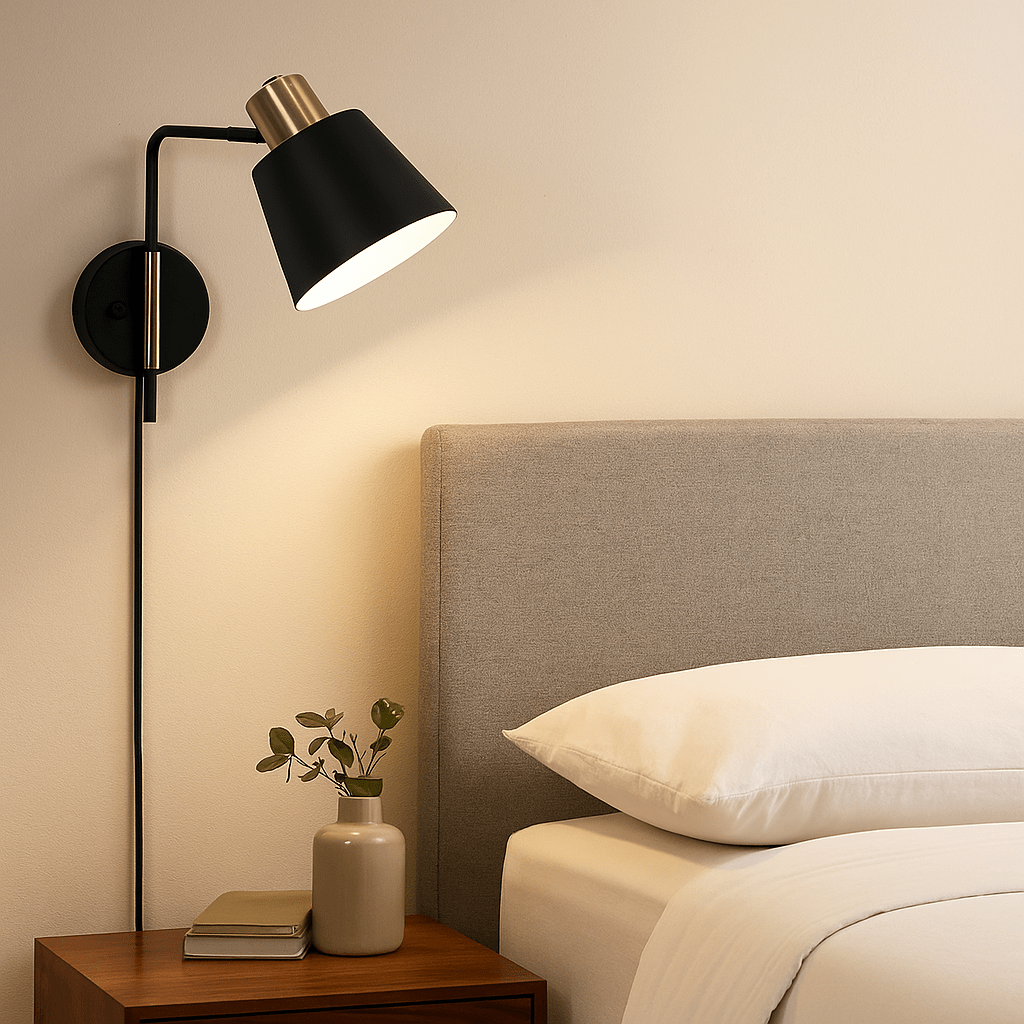
A clip-on lamp works best when the beam lands across the reading area from the side. Mounting it too close to eye level can create glare; mounting it too far behind the headboard can leave the page in shadow. A flexible neck is useful because it lets two people share a room without forcing the light across the whole bed.
Before fixing the lamp in place, sit in your normal reading position and check three things: the clamp does not press into the headboard finish, the arm reaches the page without being fully stretched and the on/off switch is accessible without leaning across the bed.
Clamp, clip or freestanding base?
For a small apartment, the mounting method often matters more than the styling. A clamp or clip keeps the footprint small, but it needs a firm edge. A freestanding lamp is easier to move, but it occupies valuable bedside or desk space.
| Format | Best for | Advantages | Check before buying |
|---|---|---|---|
| Clip-on | Headboards, shelves and thin desk edges | Small footprint and easy repositioning | Clamp opening, grip pressure and edge thickness |
| Clamp lamp | Desks, worktops and sturdy shelves | More secure for focused task lighting | Base clearance, cable route and reach |
| Table lamp | Bedside tables and sideboards | No edge required; simple to move | Footprint, shade height and switch access |
Using one light for reading and work-from-home tasks
A plug-in reading light can support more than bedtime reading when its arm and shade are adjustable. At a desk, aim the beam across the page or keyboard from the opposite side to your writing hand. This reduces the chance of your hand casting a strong shadow over the work.
For video calls, keep the lamp out of the camera frame where possible and avoid aiming it directly at your face. A soft, controlled beam is more comfortable than a bare bright source, especially in a small room with reflective white walls.
Brightness, colour and glare: what feels comfortable?
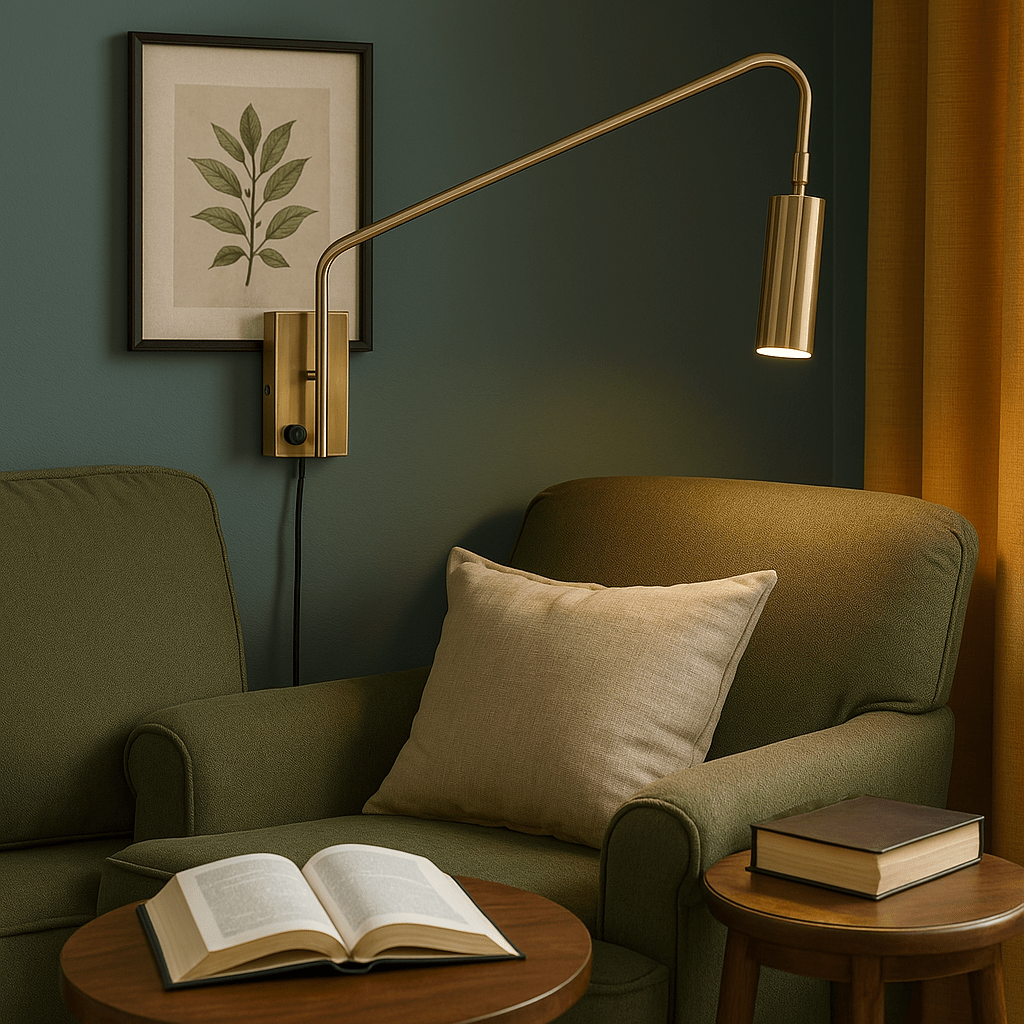
Reading comfort depends on contrast and control, not just maximum brightness. A shade that directs light towards the page is usually more comfortable than an exposed bulb shining into the room. Warm white light can feel relaxed in a bedroom, while a more neutral white may suit paperwork or detailed tasks. The best choice depends on the rest of the room and the reader's preference.
Look for a fitting that lets you adjust direction and, where supported, brightness. If the product uses a replaceable bulb, confirm the lamp cap and the bulb's intended wattage before ordering. Do not assume that a dimmer on the wall will work with every plug-in fitting or LED bulb.
Apartment-friendly cable planning
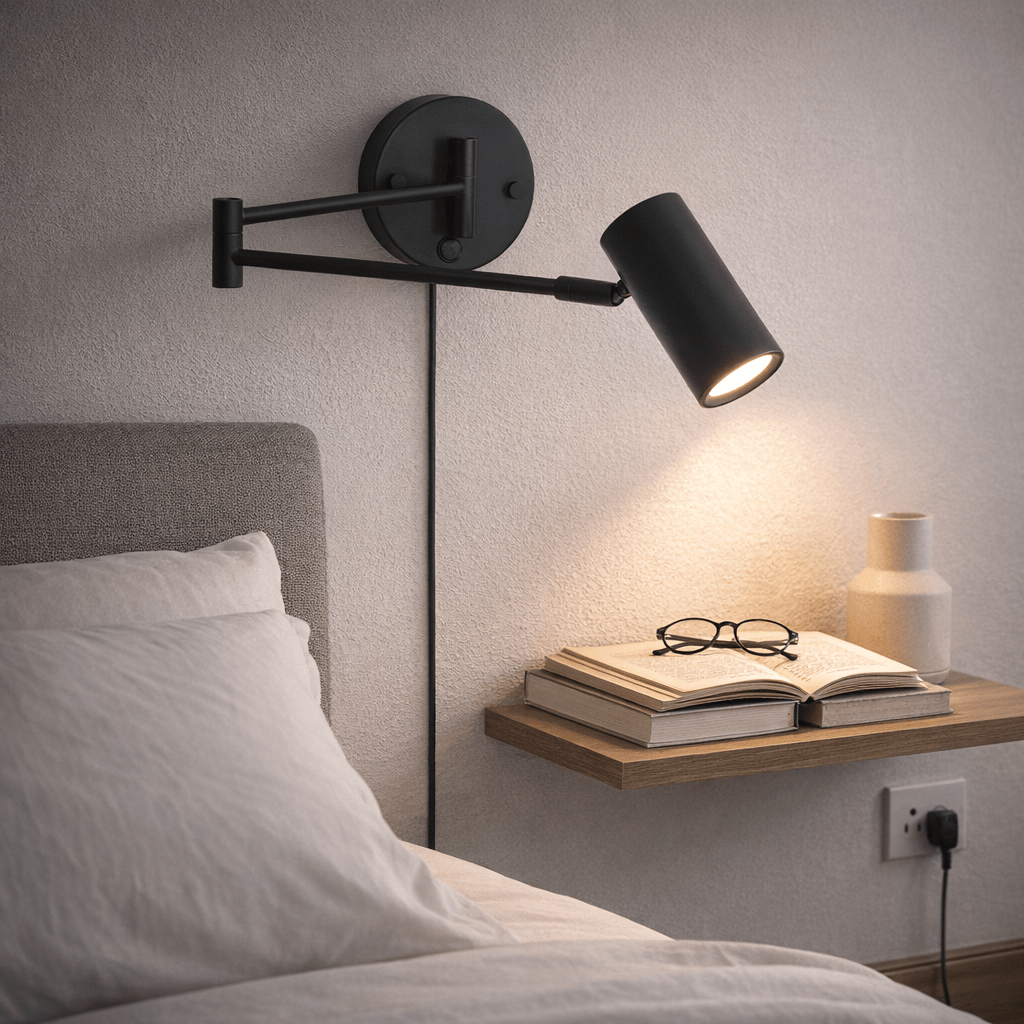
The cable is part of the buying decision. Keep it close to the back edge of the desk or headboard, use an existing cable-management route where available and leave enough slack for the arm to move. Do not run a loose cable across a walkway or under a rug where it can be damaged.
Place the switch where it can be reached without pulling the fitting. For a bedside setup, a lead with an inline switch can be more convenient than a switch hidden behind furniture. For a desk, make sure the lead does not compete with laptop and charger cables.
Safety and everyday-use checks
- Use the fitting indoors unless the product is specifically rated for another environment.
- Keep the light and cable away from water, heaters and pinch points.
- Do not overload a weak shelf edge or clamp onto fragile glass without confirmed support.
- Replace damaged cords or plugs instead of taping over a fault.
- Follow the product instructions for bulb type, wattage and assembly.
For permanent wiring, new wall points or a concealed cable route, use a qualified electrician. A plug-in light is useful precisely because it can solve a focused lighting need without turning a simple reading corner into an unplanned electrical installation.
Frequently asked questions
Are plug-in reading lights suitable for apartments?
Yes. Plug-in reading lights can suit apartments because they add focused light without requiring a new ceiling point or a permanent wall installation. Check that the clamp or base is stable and route the cable safely.
Where should a clip-on reading light be positioned?
Position the light slightly to the side and behind your reading shoulder, aimed at the page rather than directly at your eyes. The exact position depends on the bed, chair, headboard or shelf where it is attached.
What should I check before buying a plug-in reading light?
Check the clamp opening or base footprint, flexible-arm reach, shade direction, switch position, cable length, bulb or LED details and whether the fitting is intended for indoor use.
Can a plug-in reading light replace the main bedroom light?
Usually not. It is best used as focused task lighting alongside ambient room lighting, so the reader can see comfortably without making the whole apartment bright.


