



Why Bamboo Pendant Lights Work So Well in Coastal, Bush & Eco-Style Interiors
Bamboo pendant lights work beautifully in South African homes because they soften hard architecture, suit our relaxed indoor-outdoor way of living, and bring warmth without feeling heavy. They are especially effective in coastal spaces, bush-inspired interiors, and eco-style homes where texture, airflow, and natural materials matter.
From Durban beach houses to Waterberg lodges and Cape Town apartments with a laid-back organic feel, bamboo pendants offer more than trend appeal. They filter light gently, add visible craftsmanship, and pair easily with stone, timber, linen, concrete, and matte black finishes that are already popular in local interior design.
At Future Light, we often see customers arrive looking for “something natural” and then realise what they really need is balance: a decorative fitting that looks relaxed, still performs properly, and doesn’t fight with the rest of the room. Bamboo pendants tend to solve that brief surprisingly well, especially when layered with practical lighting such as downlights, wall lights, or LED strip lighting.
That combination of style and usability is exactly why these fittings are becoming favourites in homes, guesthouses, cafés, and design-led hospitality spaces across South Africa.
Key Takeaways
- Bamboo pendant lights add organic texture that works especially well in relaxed coastal, bush-lodge, and eco-inspired spaces.
- For comfortable ambient lighting, pair them with warm white 2700K–3000K lamps and aim for CRI 90+ in living, dining, and hospitality interiors where materials and skin tones should look natural.
- Correct hanging height matters: over dining tables, a common target is roughly 750–900mm above the tabletop, adjusted for fitting size and sightlines.
- Open-weave bamboo shades create mood and pattern, but they usually need supporting task lighting from downlights, wall lights, or under-counter lighting.
- South African humidity, salt air, dust, and insects make indoor positioning, lamp choice, and cleaning routines more important than many buyers expect.
- The best buying decision is not just the prettiest pendant, but the one with the right size, bulb compatibility, maintenance level, and layered-lighting plan.

If you want a similar natural, decorative look, browse Future Light’s pendant ranges and compare shapes, finishes, and room suitability.
View pendant collectionWhy do bamboo pendant lights suit coastal, bush and eco-style interiors so naturally?
What makes bamboo pendants feel right in these spaces?
Bamboo pendant lights feel right in these interiors because they echo natural textures, soften visual contrast, and create relaxed filtered light that suits calm, grounded spaces. Their material language matches timber, linen, rattan, stone, and handcrafted décor with very little effort.
In coastal homes, that matters because hard reflective finishes can make a room feel cold or too stark, especially when daylight is bright for most of the day. A woven shade introduces movement and softness, helping white walls, screeded floors, pale timber, and muted blue or olive furnishings feel more settled. In bush-style interiors, the same fitting links beautifully with leather, rough plaster, darker timbers, and earthy palettes without looking too polished.
From a lighting perspective, bamboo often diffuses and breaks light rather than producing a flat wash. That gives a more atmospheric mood than a bare exposed lamp, especially with a warm 2700K or 3000K LED bulb. Where the shade is dense, expect lower effective downward light, so the fitting works best as decorative ambient lighting rather than your only source. For truer colour rendering of wood, fabrics, and food on a dining table, a CRI of 90+ is a smart target.
In short: Bamboo works because it complements natural finishes and creates a softer, more relaxed lighting mood.

Do bamboo pendants only work in obviously rustic rooms?
No, bamboo pendant lights also work in contemporary interiors when they are used as a texture contrast against cleaner architectural lines. That contrast is often exactly what prevents a modern home from feeling flat or overdesigned.
A Johannesburg home with black-framed glazing, polished concrete, and minimalist cabinetry can still benefit from a woven pendant above the dining table or stair landing. In fact, the combination can feel even more premium because the natural shade introduces warmth where metal and hard surfaces dominate. The same principle works in modern guesthouses and restaurants, where designers want an “easy luxury” mood rather than a formal one.
One practical point many installers mention is scale. An airy bamboo pendant can look visually large without feeling chunky, which is useful in double-volume spaces or open-plan rooms that need presence but not visual heaviness. If your ceiling height is standard 2.4m to 2.7m, keep lower edges clear enough for comfortable movement and sightlines. If you are unsure about height and spacing, this guide on pendant placement in South African homes is worth reading before you buy.
In short: Bamboo pendants are not limited to rustic décor; they often elevate clean modern spaces by adding warmth and contrast.
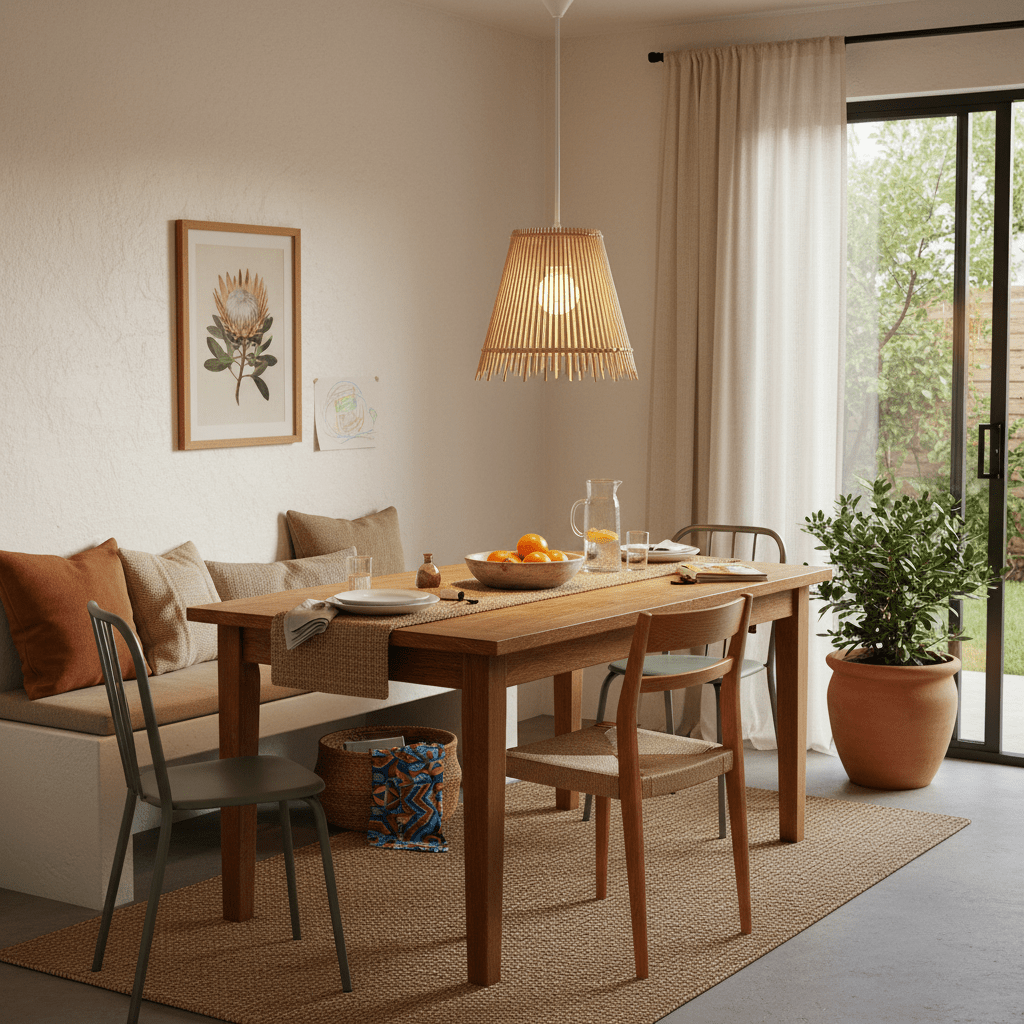
Why do they feel especially South African?
Bamboo pendant lights feel especially South African because they fit our climate-responsive, indoor-outdoor style and work comfortably with local materials like timber, stone, woven textures, and earthy finishes. They look relaxed rather than formal, which suits how many South Africans actually live and entertain.
Think of a covered patio in Pretoria, a compact Airbnb on the Garden Route, or a bush lodge dining area near Hoedspruit. In all of those spaces, people want lighting that feels warm, tactile, and welcoming after sunset. Bamboo helps bridge daytime natural light and evening ambience. It also pairs neatly with popular layers like wall sconces, under-counter strips, and dimmable lamps for a more complete scheme.
At Future Light, we’ve seen growing interest in natural-fibre and woven lighting from homeowners who do not want interiors that look too cold, too urban, or too trend-driven. The appeal tends to last because the material reads as timeless rather than flashy. If you are building a full room scheme, our indoor lighting guide for South African homes helps with layering around statement fittings.
In short: Bamboo pendants suit local architecture and lifestyle because they feel natural, easy-going, and warm rather than overly formal.
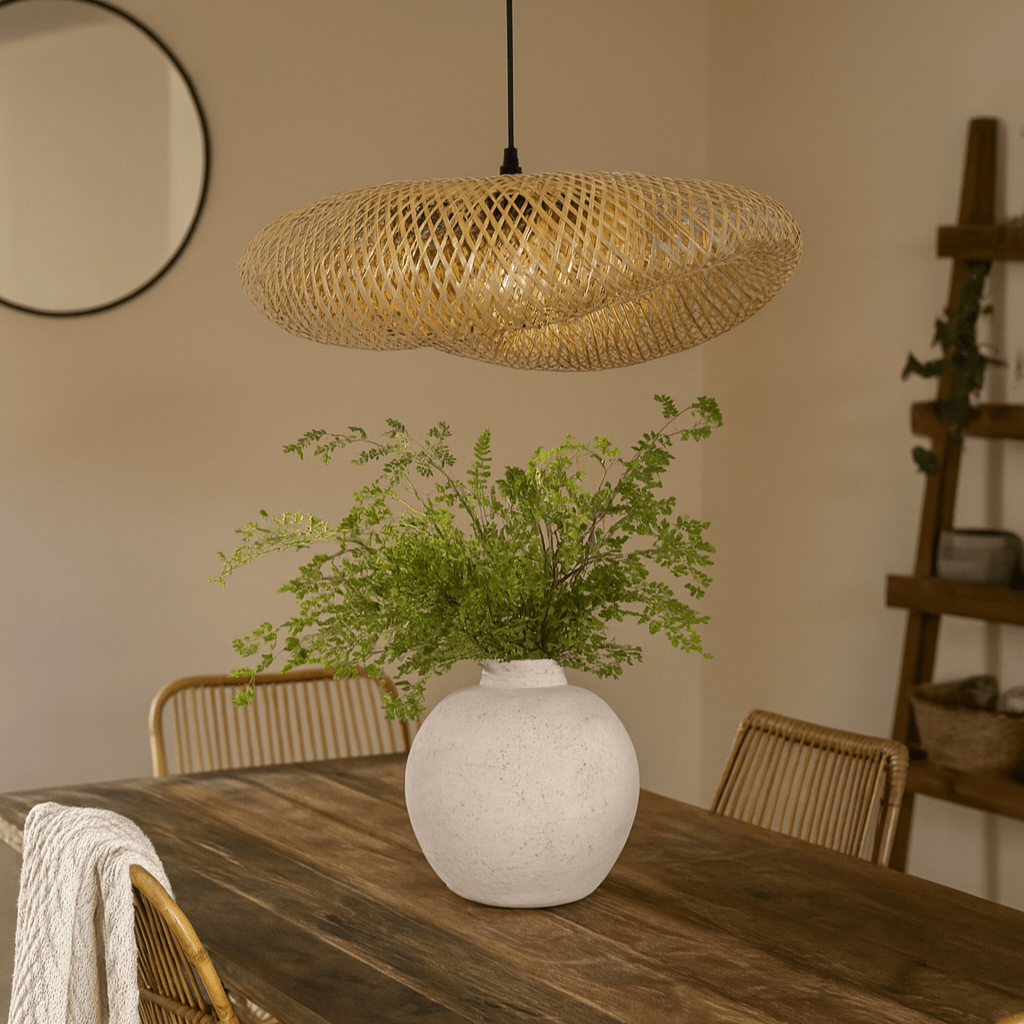
Bamboo pendants shine when the room already leans into texture, daylight, and a relaxed way of living.
A decorative pendant works best when backed by proper ambient and task lighting. Compare room-specific lighting ideas before finalising your layout.
View living room ideasHow should you choose the right bamboo pendant for performance, scale and mood?
What size bamboo pendant should you choose?
The right bamboo pendant size depends on the table width, ceiling height, and how visually open the shade is. Larger woven shades can work well because they read lighter than solid metal or glass fittings of the same diameter.
As a practical rule, a single pendant above a small round table might sit around 350mm to 450mm in diameter, while a larger rectangular dining setup may need one oversized fitting or a row of two to three pendants. In bedrooms, a medium shade can be ideal if you want a soft decorative layer without overpowering the room. In compact apartments, a more open weave helps maintain visual airiness.
Height matters just as much as diameter. Over dining tables, many installers aim for roughly 750mm to 900mm from tabletop to the lowest point of the fitting. In circulation areas, maintain comfortable head clearance. For entrance halls and lounge spaces with no furniture directly below, the drop can be more generous, provided the fitting still relates to the room’s scale. If you want design examples, Future Light’s guide to pendant lights for modern interiors is a useful comparison point.
In short: Choose a size that suits the furniture below, the ceiling height above, and the visual openness of the woven shade.

Which bulb colour and brightness work best with bamboo shades?
Warm white lamps in the 2700K to 3000K range usually work best with bamboo pendant lights because they enhance natural fibres and create a relaxed, flattering glow. Neutral 4000K can work in some kitchens or mixed-use hospitality spaces, but it often feels less cosy.
Brightness should match the role of the fitting. If the bamboo pendant is mostly decorative, a lamp output around 400 to 800 lumens may be enough, depending on shade density and room size. If you need more useful light over a table or counter, you may move toward 800 to 1200 lumens, but always consider glare and the shade’s openness. Many woven pendants expose the light source partially, so the bulb shape and brightness are visible in the experience.
CRI is worth paying attention to here. In dining and living areas, a CRI of 90+ helps timber grains, woven fibres, food, and skin tones look more natural. If the fitting uses replaceable lamps, this gives you flexibility to tune the feel later with quality LED bulbs. Dimming also makes a major difference, especially in hospitality-style spaces where one room needs to move from practical daytime use to evening ambience.
In short: Use warm white 2700K–3000K lamps, sensible lumen levels, and preferably CRI 90+ for the most natural, flattering result.

Do bamboo pendants provide enough light on their own?
Usually not, especially in larger rooms or work-oriented spaces. Bamboo pendants are strongest as decorative ambient lighting, so most rooms need supporting layers for proper visibility and comfort.
This is where many homeowners get caught out. They choose a beautiful statement pendant, switch it on at night, and then realise corners feel dim, kitchen prep areas are underlit, or the room lacks depth. The better approach is layered lighting: pendant for mood and focus, downlights for background illumination, wall lights for softness, and strips for joinery or shelving accents. In eco-style spaces, that layered approach actually feels more natural than relying on one bright central fitting.
For practical performance, think in zones. Dining tables can tolerate lower general brightness if the atmosphere is intentional. Kitchens, reading areas, and prep spaces cannot. If you need support lighting, browse LED downlights or learn how to integrate LED strip lighting properly in South African homes for cleaner task lighting.
In short: Bamboo pendants are best used as one layer in a room, not the whole lighting plan.

| Lighting factor | Best guideline for bamboo pendants | Why it matters |
|---|---|---|
| Colour temperature | 2700K–3000K | Enhances natural fibres and creates a relaxed mood |
| CRI | 90+ | Improves colour accuracy for wood, fabrics, food and skin tones |
| Decorative lumen range | 400–800lm | Good for mood lighting where support layers exist |
| Stronger functional range | 800–1200lm | Useful where a pendant needs more practical light output |
| Typical dining-table drop | 750–900mm above table | Balances intimacy, glare control and sightlines |
| Indoor protection | IP20 typical | Suitable for dry indoor areas, not exposed weather conditions |
The prettiest pendant is not always the best one; the best one is the pendant that still works at night.
For most bamboo pendants in living and dining rooms, look for warm white 2700K–3000K lamps, CRI 90+, and layered support lighting.
Browse dimmable bulbsCan bamboo pendant lights handle South African coastal and bush conditions?
Are bamboo pendant lights suitable for coastal homes?
Yes, bamboo pendant lights can work very well in coastal homes, but they are generally better suited to protected indoor areas than exposed outdoor conditions. Salt air, humidity, and wind-blown moisture can shorten the life of natural materials if the fitting is not properly sheltered.
In a Durban or Ballito home, a bamboo pendant looks superb in a dining room, enclosed patio, bedroom, or entrance hall where sea air is present but direct weather is limited. For fully exposed verandas or outdoor entertainment areas, natural woven materials need much more caution. Most decorative pendants of this type are rated around IP20, which means dry indoor use, not open-weather installation. If the space gets spray, mist, or direct rain, a more suitable outdoor-rated fitting is the safer choice.
One smart compromise is to keep the bamboo look indoors and reinforce the same mood outside with complementary outdoor lighting in warm white tones. Coastal homeowners often combine natural pendants inside with IP54 or IP65 wall lights and bollards outside for durability. That keeps the design story cohesive without forcing the wrong product into the wrong environment.
In short: Bamboo pendants suit coastal interiors beautifully, but most are not ideal for exposed outdoor coastal installation.

Do they work in bush lodges, farmhouses and safari-style homes?
Yes, bamboo pendants are excellent in bush lodges, farmhouses, and safari-style homes because they add texture without looking too glossy or urban. They sit comfortably alongside stone, thatch-inspired tones, dark timber, canvas, and handmade décor.
In these settings, the magic often comes from contrast and restraint. A large woven pendant over a long harvest table or reception desk gives visual focus without competing with exposed beams or natural scenery. In lodge-style bedrooms, a smaller pendant can feel softer than a metal fitting and less expected than a conventional chandelier. The result is warm, intimate, and grounded rather than theatrical.
Dust is the main maintenance consideration in bush environments. Open-weave shades can collect fine dust more obviously than smooth closed fittings. That does not make them unsuitable; it just means staff or homeowners should plan for gentle routine cleaning. If the room also needs better reading or circulation light, complement the pendant with well-placed indoor wall lights or directional fittings.
In short: Bamboo pendants feel highly at home in bush-style interiors, provided you account for dust and layered lighting needs.

What maintenance and installation details matter most?
The most important details are protected placement, proper ceiling fixing, good bulb selection, and a simple cleaning routine. Bamboo pendants are not difficult to live with, but they do perform best when treated as natural decorative fittings rather than maintenance-free industrial products.
First, support the fitting correctly. A wide natural shade can be light in mass but bulky in shape, so the mounting point, cup, and suspension should be secure and neat. Second, choose lamps that do not run excessively hot. Quality LED lamps are ideal because they reduce heat stress compared with older incandescent options. Third, think about insects and dust in rural or warm-climate homes, especially if windows stay open often.
For cleaning, a soft dry cloth, feather duster, or light vacuum-brush routine usually works better than aggressive wiping. Avoid soaking the material. In coastal zones, occasional checks for corrosion on metal components matter too. If you are integrating pendants into a broader eco-style space, combining them with subtle joinery lighting from LED strip lights can improve function while keeping the natural mood intact.
In short: Secure installation, cool-running LED lamps, and gentle routine cleaning keep bamboo pendants looking good for longer.
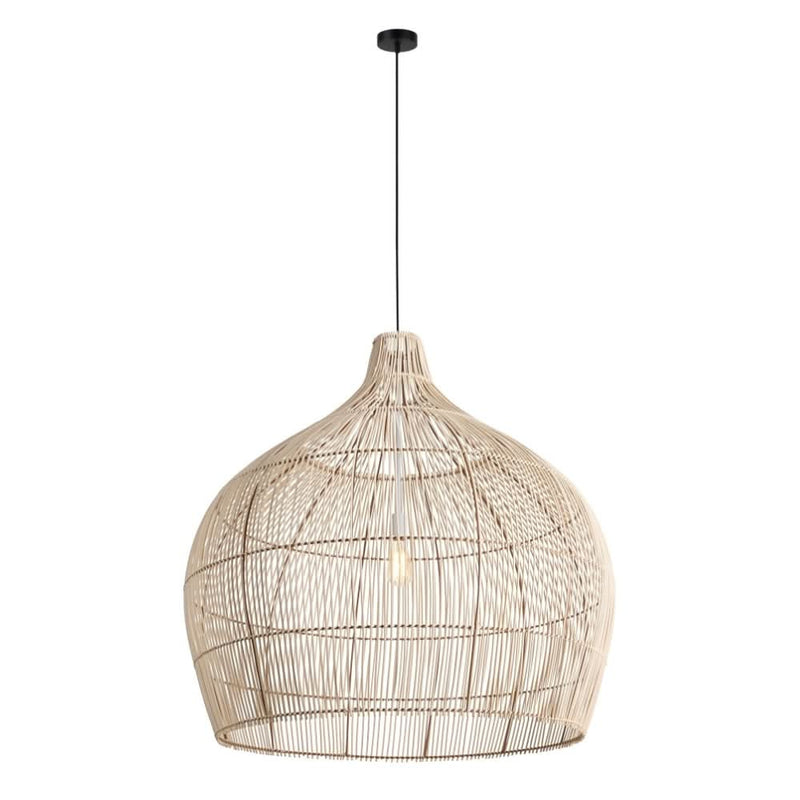
Natural materials reward a little care, and the payoff is a room that feels lived-in and inviting rather than sterile.
Do not install an indoor woven pendant in an exposed patio just because it “looks outdoor-ish”. Check the IP rating first and use weather-rated fittings where moisture or spray is likely.
Read the outdoor lighting guideWhere do bamboo pendant lights work best, and how do you buy well?
Which rooms and commercial spaces suit bamboo pendants best?
Bamboo pendant lights work best in dining rooms, lounges, bedrooms, entrance halls, hospitality settings, and design-led retail or café spaces where warmth and texture matter. They are less suited to wet areas, harsh task zones, or exposed exteriors unless specifically rated for those applications.
In homes, the classic win is above a dining table, where the pendant acts as both focal point and mood-setter. Bedrooms can also benefit, especially when pendants replace bulky bedside lamps and free up surface space. In guesthouses and boutique hospitality spaces, they help establish a calm, memorable identity without huge electrical complexity. Retailers and restaurants use them to humanise clean architectural shells and make spaces feel more approachable.
Where function is critical, combine them with purpose-driven lighting. Kitchens need stronger layered task light. Bathrooms need correct IP-rated fittings. Passages and staircases need safe circulation levels. If you are planning by room type, Future Light’s category hubs for dining room lighting and lounge lighting can help narrow the right placement ideas.
In short: Bamboo pendants are strongest in mood-driven living and hospitality spaces, with support lighting added where tasks demand more clarity.

How do bamboo pendants compare with rattan, glass and metal pendants?
Bamboo pendants generally feel warmer and more organic than glass or metal, while sitting close to rattan in style but often with a slightly cleaner, lighter visual character. The best choice depends on whether you want texture, sparkle, structure, or easy maintenance.
Compared with metal pendants, bamboo is less formal and usually softer in how it distributes light. Compared with glass, it gives less brilliance but more atmosphere. Compared with rattan, the look can overlap strongly, though certain bamboo designs feel more architectural or linear. If your space already has heavy texture from rugs, woven chairs, or thatch-inspired detailing, you might prefer a simpler pendant shape to avoid visual clutter.
For shoppers who are still deciding, this is where comparison browsing helps. If you like the natural category but want alternatives, explore rattan pendant lights for a closely related feel, or look at glass pendants if you want a touch more refinement and light transmission.
In short: Bamboo is ideal when you want warmth and texture more than shine, formality, or a crisp industrial edge.

What should you check before buying?
Before buying a bamboo pendant, check the size, hanging height, bulb compatibility, IP rating, cleaning practicality, and whether the room already has enough supporting light. These details matter more than the product photo.
Also look at the weave density. An open weave throws pattern and lets more light through. A denser weave creates a moodier lantern effect but may demand stronger surrounding lighting. Confirm whether the fitting includes an integrated LED or needs a separate lamp, and if separate, what cap type it takes. If dimming matters to you, ensure both lamp and dimmer are compatible.
Commercial buyers and hospitality owners should also think about replacement ease and cleaning access. A beautiful fitting that is awkward to maintain across ten guest suites becomes expensive quickly. If you are unsure, contact a lighting team instead of guessing. Future Light regularly helps customers compare decorative impact against real use-case requirements, which is often the difference between a room that photographs well and one that actually works.
In short: Buy with the real room in mind: size, output, maintenance, and compatibility first, style second.

If a pendant is doing the decorative heavy lifting, make sure the rest of the lighting quietly does the practical work.
- Choose warm white 2700K–3000K for most bamboo pendants.
- Aim for CRI 90+ where colour quality matters.
- Check whether the fitting is decorative only or needs functional support lighting.
- Confirm actual hanging height and ceiling clearance.
- Use IP20 indoors; move to outdoor-rated fittings for exposed areas.
- Think about dust, humidity, and cleaning access before committing.
Frequently asked questions about bamboo pendant lights
Are bamboo pendant lights still in style in South Africa?
Yes, bamboo pendant lights are still in style because they fit the ongoing move toward natural textures, relaxed interiors, and warm layered lighting in South African homes and hospitality spaces.
Do bamboo pendant lights give enough light for a dining room?
They can give enough mood light for a dining room, but most dining spaces still benefit from supporting ambient lighting such as downlights or wall lights for better overall balance.
What colour temperature is best for a bamboo pendant light?
Warm white 2700K to 3000K is usually best because it flatters natural fibres, timber, food, and skin tones while creating a softer evening atmosphere.
What CRI should I choose for a bamboo pendant?
A CRI of 90 or higher is a good target where appearance matters, especially in dining rooms, lounges, bedrooms, guesthouses, and hospitality spaces.
Can bamboo pendant lights be used outside?
Most bamboo pendants should not be used in exposed outdoor areas because they are commonly indoor-rated around IP20 and can be damaged by moisture, salt air, and weather exposure.
How high should a bamboo pendant hang above a dining table?
A practical starting point is around 750mm to 900mm above the tabletop, then adjust based on ceiling height, shade size, and sightlines across the room.
Are bamboo pendants good for coastal homes?
Yes, they are excellent for protected coastal interiors where they add texture and warmth, but exposed patios and weather-facing areas need more durable outdoor-rated alternatives.
How do I clean a bamboo pendant light?
Clean it gently with a soft duster, dry cloth, or vacuum brush attachment, and avoid soaking the material or using harsh cleaners that can damage the natural finish.
Final thoughts
Bamboo pendant lights work so well in coastal, bush, and eco-style interiors because they do something many fittings cannot: they make a room feel softer, warmer, and more human without trying too hard. In South African spaces shaped by sunlight, texture, entertaining, and a strong connection to the outdoors, that is incredibly valuable.
The winning formula is simple. Choose the right size. Use a warm 2700K–3000K lamp. Prioritise CRI 90+ where visual quality matters. Respect the IP rating. Layer the room properly. Then let the pendant do what it does best: add mood, character, and a natural focal point.
If you are comparing options, start with Future Light’s pendant light collection, browse related woven pendant styles, or read the guide on height, spacing and placement before you buy. If your project includes multiple rooms, a guesthouse, or a hospitality fit-out, it is well worth getting tailored advice so the decorative choices also perform properly.


