


2026 Update: UV flashlights are one of those small tools that feel surprisingly useful once you understand what they can do. They are not just for glow-in-the-dark effects or novelty use. A proper UV flashlight can help reveal marks, stains, security features, scorpions, UV-reactive materials and other details that are difficult or impossible to see under normal white light.
For South African homes, businesses, farms, workshops and outdoor use, a UV torch can be a practical item to keep close by. Whether you are checking for pet stains, inspecting documents, scanning a campsite, testing UV-reactive materials or using it for hobby and inspection work, the right UV flashlight gives you another way to see what ordinary lighting misses.
At Future Light, we stock a range of UV lighting solutions, including UV flashlights, UVA floodlights, UV strips and UV tubes. The key is choosing the right type of UV light for the job, using it safely, and understanding that UV lighting is a specialist tool — not a normal torch replacement.
What is a UV flashlight?
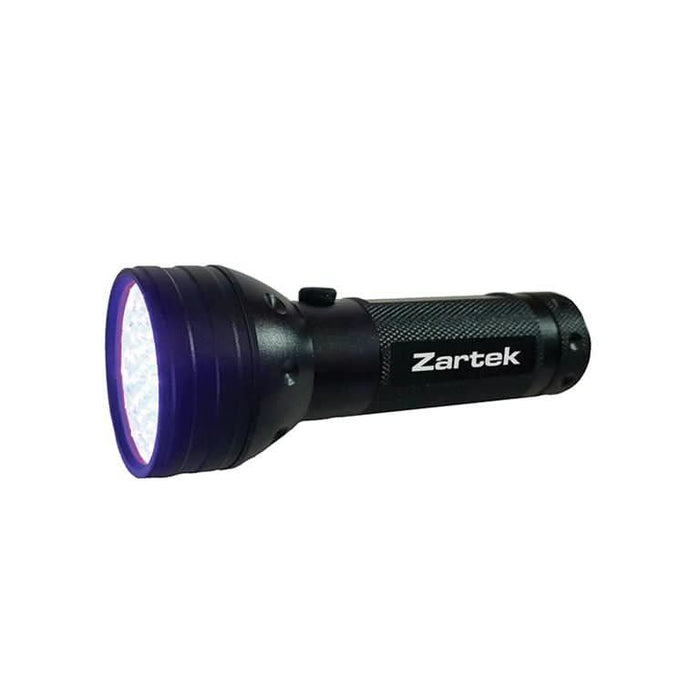
A UV flashlight is a portable torch that emits ultraviolet light instead of standard visible white light. This ultraviolet light causes certain materials to fluoresce, which means they glow or become easier to see when the UV beam shines on them. That is why UV flashlights are commonly used for inspection, detection, hobby use and outdoor scanning.
Unlike a regular flashlight, a UV flashlight is not designed mainly to brighten up a room or pathway. Its job is to reveal specific materials, markings or reactions. Pet stains, some security marks, certain minerals, scorpions and UV-reactive paints can stand out strongly under the right UV wavelength. This makes the tool useful in homes, workshops, hospitality spaces, retail environments and outdoor settings.
It is important to understand that not every material will glow under UV light. The result depends on the material, the wavelength of the torch, the darkness of the environment and the strength of the beam. For best results, UV flashlights are usually used in low-light or dark conditions where the fluorescent reaction is easier to see.
How does UV light work?
UV light sits outside the normal visible light range, which means we do not see it in the same way we see light from a standard LED torch. When ultraviolet light hits certain materials, those materials absorb the energy and release it back as visible light. This is the glow effect known as fluorescence.
This glow is what makes UV flashlights so useful. Instead of simply lighting up everything evenly, the UV beam helps certain details stand out. A surface may look clean under normal lighting, but a UV torch can reveal stains or residues. A document may look plain at first glance, but UV-reactive security marks may appear when scanned correctly.
The wavelength of the UV flashlight matters. Many portable UV torches are designed for UVA use, which is suitable for inspection, fluorescence and outdoor scanning applications. UVC is a different category and should be treated with far more caution, especially when used for sterilisation or technical applications. For everyday users, it is best to choose the product based on the intended use rather than simply buying the strongest-looking option.

What can you use a UV flashlight for?
A UV flashlight can be used for a wide range of practical and specialist tasks. Around the home, one of the most common uses is finding pet stains on carpets, rugs, furniture and tiled areas. These stains can be difficult to see in normal light, especially once they have dried, but UV light can often make them easier to locate so they can be cleaned properly.
UV flashlights are also useful for checking certain banknotes, documents and security markings. Many official items include UV-reactive features that only show under ultraviolet light. This makes UV torches handy for small businesses, event staff, collectors and anyone who needs a quick visual check. They should not be treated as the only verification method, but they are a useful first inspection tool.
Outdoor users also like UV flashlights for scorpion detection, mineral hunting and campsite checks. In dry regions, a UV torch can help spot scorpions at night because they often glow under UV light. This can be useful for campers, farmers, lodge owners and homeowners in areas where scorpions are common.
- Pet stain detection: Helps locate hidden stains for targeted cleaning.
- Scorpion detection: Useful for campsite and outdoor scanning at night.
- Document checks: Reveals some UV-reactive security marks.
- Hobby use: Works well for minerals, collectibles and UV-reactive materials.
- Inspection work: Can assist with leak checks, residue spotting and surface inspection.

Why is a UV flashlight useful for pet stain detection?
Pet stains can be tricky because the smell may be obvious while the actual stain is hard to find. This is especially true on carpets, couches, rugs and darker surfaces. A UV flashlight can help by making some organic residues glow, allowing you to locate the affected area more accurately before cleaning.
This is useful because cleaning the wrong area wastes time and may not solve the odour problem. Once the stain is located, you can treat that exact spot with a suitable cleaning method. For pet owners, landlords, guesthouse owners and cleaning teams, this can make inspection and cleaning more efficient.
For best results, use the UV flashlight in a dark room and scan slowly across the surface. Hold the light at a practical distance from the floor or fabric and look for areas that react differently from the surrounding material. Keep in mind that some cleaning products, fibres or older marks may also fluoresce, so UV light should be used as a guide rather than absolute proof.

Can a UV flashlight help with scorpion detection?
Yes, UV flashlights are commonly used for scorpion detection because many scorpions glow under ultraviolet light. This makes them easier to spot at night, especially on dry ground, paving, rocks, walls and around campsites. For South African outdoor use, this can be a practical safety tool in areas where scorpions are present.
A more powerful UV flashlight can make scanning quicker and more effective, especially over larger outdoor areas. Smaller UV torches are useful for casual inspection, while larger multi-LED models are better suited to camping, farms, lodges and outdoor properties where you may need a stronger beam or wider coverage.
It is still important to use common sense. A UV flashlight helps with visibility, but it does not replace proper outdoor caution. Wear suitable shoes when walking at night, avoid putting hands into dark spaces, and do not handle scorpions. The torch is there to help you see better, not to encourage unnecessary contact.

How do you choose the right UV flashlight?
The right UV flashlight depends on what you need it for. If you want a compact tool for occasional checks around the house, a smaller UV torch may be enough. If you need stronger performance for outdoor use, scorpion detection, larger inspection areas or regular work, a higher-output multi-LED UV flashlight is usually the better choice.
Beam strength, battery type, casing quality and wavelength all matter. For outdoor use, choose something with a durable body and comfortable grip. For inspection work, the beam should be strong enough to show details clearly in low light. For everyday home use, portability and ease of use may matter more than maximum output.
It also helps to choose from a proper UV lighting range rather than buying a random novelty torch. UV products are not all the same. Some are made for glow effects, some for inspection, some for entertainment lighting, and some for specialist applications. Matching the light to the task gives better results and avoids disappointment.
- For home use: Choose a compact UV flashlight for stains, marks and basic checks.
- For outdoor use: Choose a stronger multi-LED model with a rugged casing.
- For venues: Consider UVA floodlights, tubes or strips instead of a handheld torch.
- For inspections: Look at beam strength, wavelength and battery life.
- For safety: Avoid unnecessary exposure and never shine UV light into eyes.

What is the difference between UVA, UVB and UVC?
UVA, UVB and UVC are different parts of the ultraviolet light range, and they are used for different purposes. For most everyday UV flashlights, UVA is the common choice. It is widely used for fluorescence, glow effects, inspection, scorpion detection and UV-reactive materials.
UVB is more specialised and is often associated with reptile lighting and certain biological applications. UVC is used for sterilisation and disinfection applications, but it must be treated with serious care. UVC is not something to use casually around people, pets or exposed skin and eyes.
This distinction matters because customers sometimes refer to all ultraviolet lighting as “UV light”, but the use case can be completely different. If you want a torch for inspection or scorpion detection, you are usually looking at a UVA flashlight. If you are lighting a glow venue, you may want UVA floodlights, strips or tubes. If the application involves sterilisation, you need a product specifically designed for that purpose and used with the correct safety precautions.
Are UV flashlights safe to use?
UV flashlights can be used safely when handled responsibly, but they should not be treated like normal torches. You should never shine UV light into anyone’s eyes, and you should avoid prolonged exposure to skin. This is especially important with stronger UV lights or any product intended for specialist use.
When using a UV flashlight, keep the beam pointed at the surface you are inspecting. Use it for short, controlled periods, and store it away from children when not in use. For professional or repeated use, UV-blocking eye protection is a sensible precaution. The stronger the UV source, the more carefully it should be handled.
UVC products require additional care and should never be used casually in occupied spaces. If your goal is simple inspection, stain detection, scorpion scanning or glow effects, choose the correct UVA product instead. The safest approach is always to match the product to the job and follow the supplier’s usage guidance.
How do you maintain a UV flashlight?
A UV flashlight does not need complicated maintenance, but a few simple habits will help it last longer and perform better. Keep the lens clean, because dust, fingerprints and dirt can reduce the effectiveness of the beam. A soft microfiber cloth is usually enough for basic cleaning.
Battery care is also important. Remove batteries if the flashlight will be stored for a long time, especially if it uses standard replaceable batteries. This helps prevent leakage and corrosion inside the battery compartment. If the torch is rechargeable, keep it charged according to the product instructions and avoid leaving it in damp or very hot areas.
Store the UV flashlight in a cool, dry place and keep it protected from heavy knocks. If you use it outdoors, wipe it down after dusty or damp conditions. A UV torch is a practical inspection tool, and looking after it properly means it will be ready when you actually need it.
Key takeaways
- UV flashlights reveal certain stains, marks and materials that may not show under normal light.
- They are useful for pet stain detection, scorpion scanning, document checks, inspections and hobby use.
- Most everyday UV flashlights are designed for UVA applications.
- UVC lighting is a specialist category and should only be used with proper safety precautions.
- For best results, use a UV flashlight in darker conditions and scan slowly.
- Never shine UV light into eyes, and avoid unnecessary exposure to skin.
Frequently asked questions about UV flashlights
What is a UV flashlight?
A UV flashlight is a portable torch that emits ultraviolet light. It is used to reveal certain stains, markings, scorpions, minerals and UV-reactive materials that may not be visible under normal lighting.
How does a UV flashlight help find pet stains?
A UV flashlight can make some pet stains and organic residues fluoresce, making them easier to locate on carpets, rugs, furniture or floors. It works best in a dark room and should be used as a guide for targeted cleaning.
Can UV flashlights be used to check money or documents?
Yes, UV flashlights can help reveal some UV-reactive security features on banknotes, documents and identification items. They are useful as a quick inspection tool, but should not be the only method used for verification.
Are UV flashlights safe?
UV flashlights are safe when used responsibly. Do not shine the light into eyes, avoid prolonged exposure to skin, and use stronger UV products with extra care. UVC products require stricter safety precautions.
What should I look for when buying a UV flashlight?
Look at the intended use, wavelength, beam strength, battery type, casing quality and portability. For occasional home checks, a compact torch may be enough. For outdoor scanning or frequent inspection, a stronger multi-LED model is usually better.
Why are UV flashlights useful outdoors?
UV flashlights are useful outdoors because they can help spot scorpions, certain minerals and UV-reactive materials at night. They are popular for camping, farms, lodges and inspection work in darker outdoor areas.
Conclusion
A UV flashlight is a compact tool with a surprising number of real-world uses. It can help reveal pet stains, assist with document checks, support inspection work and make outdoor scanning easier at night. For many homes and businesses, it is one of those items you may not use every day, but when you need it, it is extremely handy.
The main thing is to choose the right UV flashlight for the job. A small model may be perfect for home use, while a stronger UV torch is better for outdoor and inspection work. For larger glow effects or venue applications, a handheld flashlight may not be enough and a dedicated UVA floodlight, strip or tube may be the better route.
Explore UV lighting at Future Light to find practical options for inspections, glow effects, scorpion detection, hobby use and specialist lighting needs.


