



2026 Update: Bathroom wall lights are one of the most effective ways to improve both the appearance and everyday function of a bathroom. While a ceiling light provides general illumination, wall-mounted lighting places useful light closer to mirrors, vanities and grooming areas where shadows are most noticeable.
The right bathroom wall light can make shaving, skincare, makeup and getting ready easier while also helping the room feel more complete. From slim LED mirror lights to decorative sconces and adjustable 3-CCT fittings, there are options for compact guest bathrooms, family bathrooms, en-suites and larger double-vanity layouts.
At Future Light, our bathroom lighting range includes IP-rated wall lights, mirror lights, vanity lighting, ceiling fittings, downlights and LED mirrors suited to modern South African bathrooms.
Why are bathroom wall lights worth adding?
Bathroom wall lights are worth adding because they solve the shadows that overhead lighting often creates around the face. When the main ceiling light sits above or behind you, the brow, nose and chin can cast shadows across the mirror. This makes detailed grooming more difficult, even when the bathroom appears bright overall.
A wall light positioned beside or above the mirror brings illumination closer to face level. This creates a more useful task-lighting layer for shaving, applying makeup, checking skin tone and getting ready in the morning.
Wall lights also contribute to the design of the room. A slim chrome mirror light can support a clean contemporary bathroom, while decorative sconces can add warmth, symmetry and visual interest. The fitting becomes part of the vanity composition rather than simply another source of light.
- Better mirror visibility: Reduces facial shadows during grooming.
- Layered lighting: Supports ceiling lights rather than relying on one source.
- Improved atmosphere: Creates softer evening light around the vanity.
- Design value: Adds shape, finish and symmetry to the bathroom wall.
- Efficient LED options: Provides useful light with relatively low power consumption.

Where should bathroom wall lights be positioned?
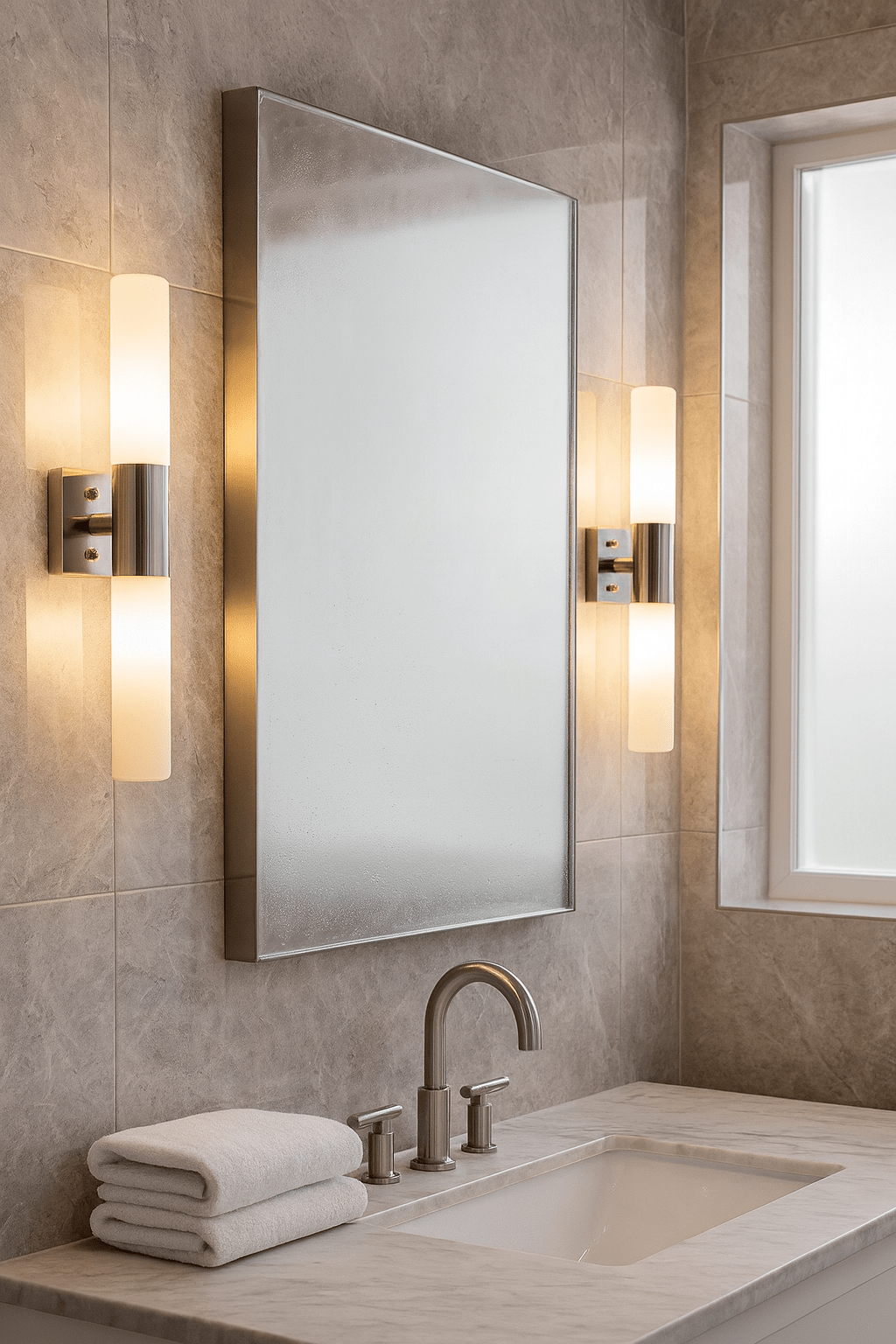
Bathroom wall lights should be positioned where they provide even illumination across the face without shining directly into the eyes. The two most common layouts are a pair of vertical lights beside the mirror or one linear light centred above it.
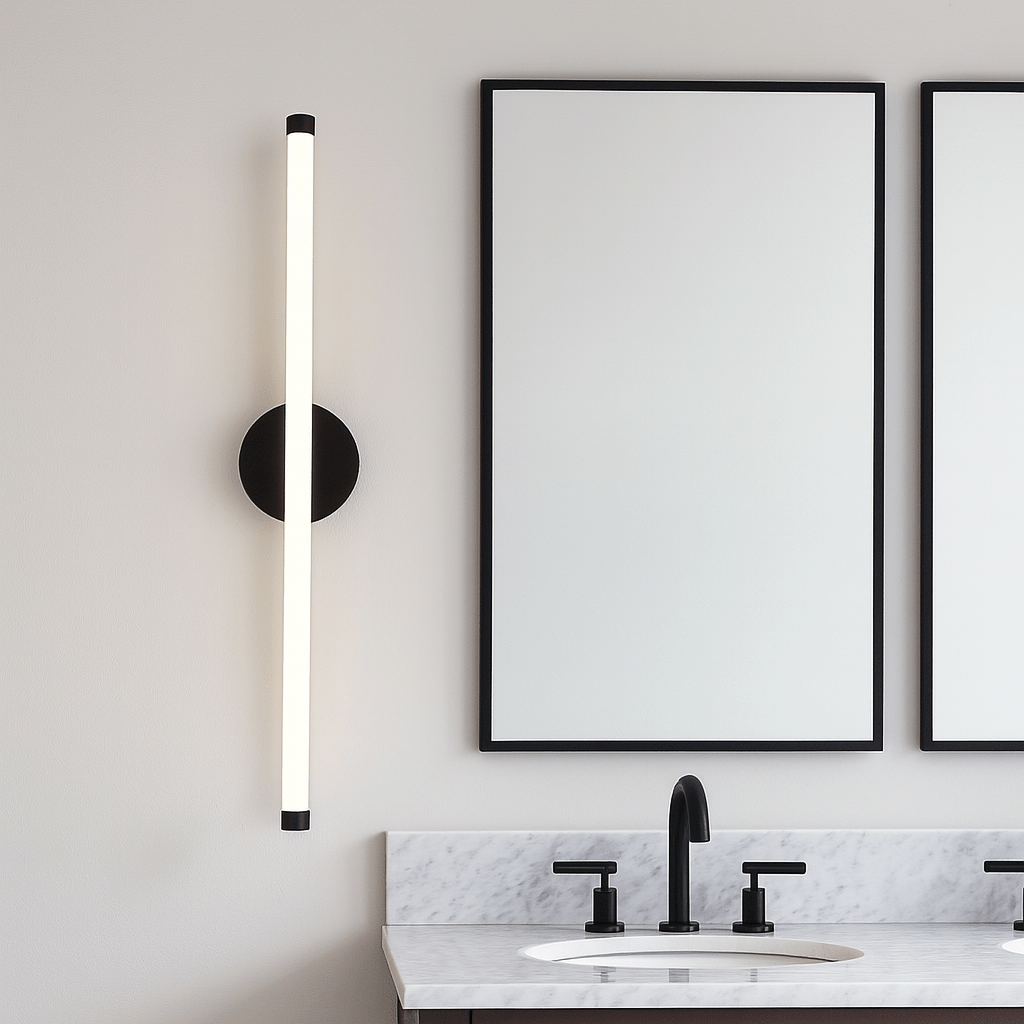
Side-mounted lights usually provide the most balanced facial lighting because they illuminate from both directions. This can reduce the strong shadows created by a single overhead source. Positioning them around eye level generally produces the most useful result, but the final height should suit the mirror, vanity and users of the bathroom.
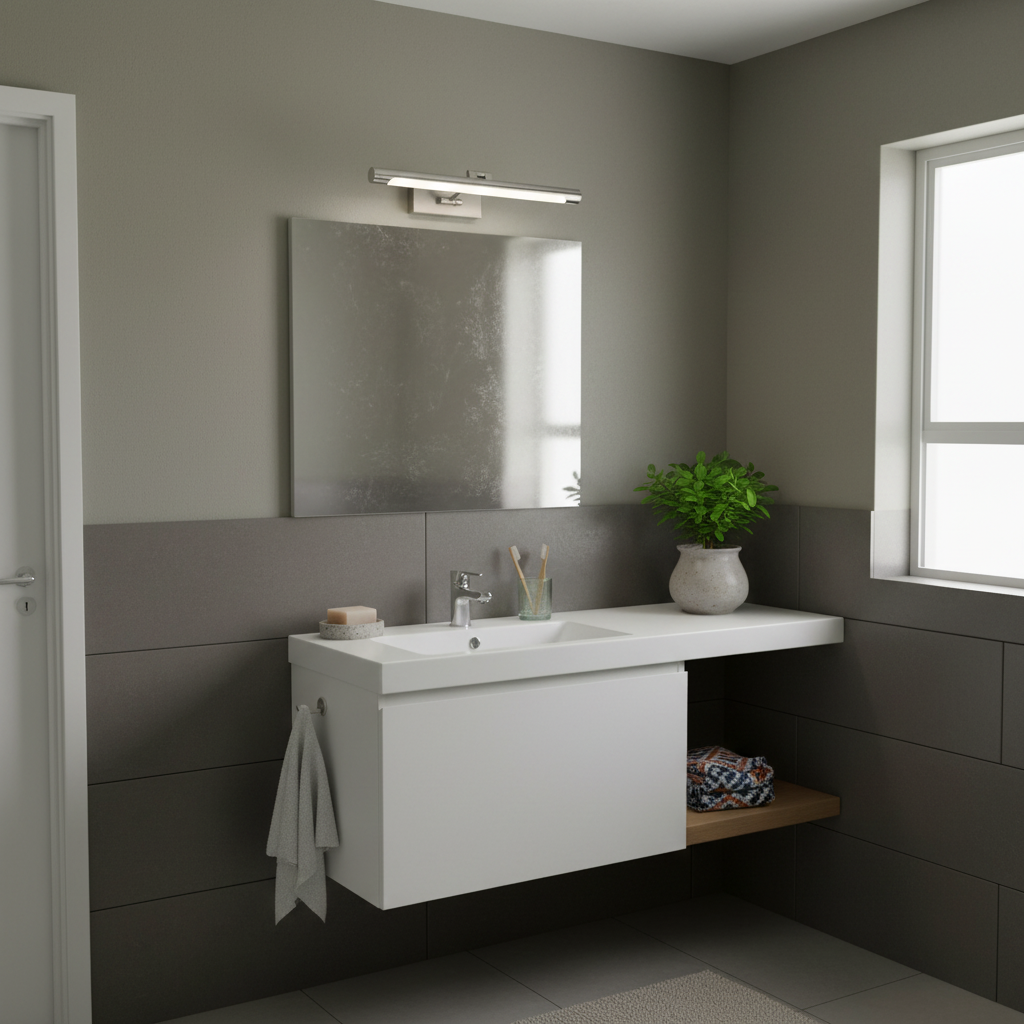
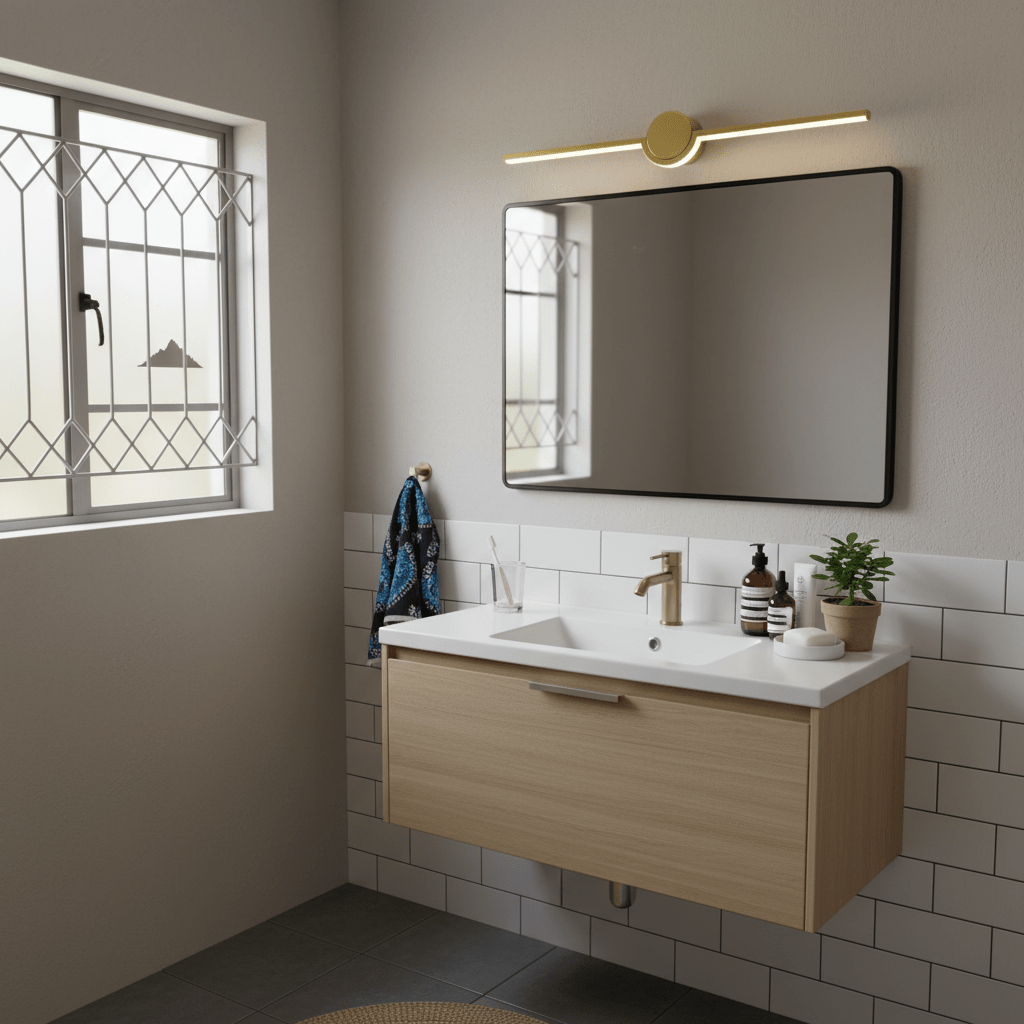
An above-mirror fitting is a practical alternative where there is not enough wall space beside the mirror. Choose a light wide enough to spread illumination across the main grooming area rather than creating one bright spot in the centre.
- Beside the mirror: Creates balanced light across both sides of the face.
- Above the mirror: Works well where side-wall space is limited.
- Double vanities: Use a wider fitting or multiple lights for even coverage.
- Guest bathrooms: A compact above-mirror light keeps the layout simple.
- Large mirrors: Match the light width to the vanity rather than choosing a fitting that looks undersized.
What IP rating should a bathroom wall light have?
The required IP rating depends on where the wall light will be installed and how close it is to water. Bathrooms contain steam, condensation and splash-prone areas, so a decorative indoor wall light should not automatically be assumed suitable.
IP44 is commonly used for bathroom wall and mirror lights positioned in damp or splash-prone areas where that rating is appropriate for the specific installation zone. It indicates protection against solid objects larger than 1mm and splashing water from different directions.
Areas closer to a bath, shower or direct water exposure may require stronger protection. Bathroom zones and electrical requirements should be assessed by a qualified electrician before installation. The rating of the fitting must match its actual position, not simply the fact that it is somewhere inside the bathroom.
- Dry vanity areas: Still benefit from moisture-resistant bathroom fittings.
- Near basins: Choose a suitable splash-resistant product.
- Near showers or baths: Confirm the required zone rating professionally.
- Steam and condensation: Can affect unsuitable indoor fittings over time.
- Professional installation: Helps preserve safety and the fitting’s intended protection.
Which colour temperature is best for bathroom wall lights?
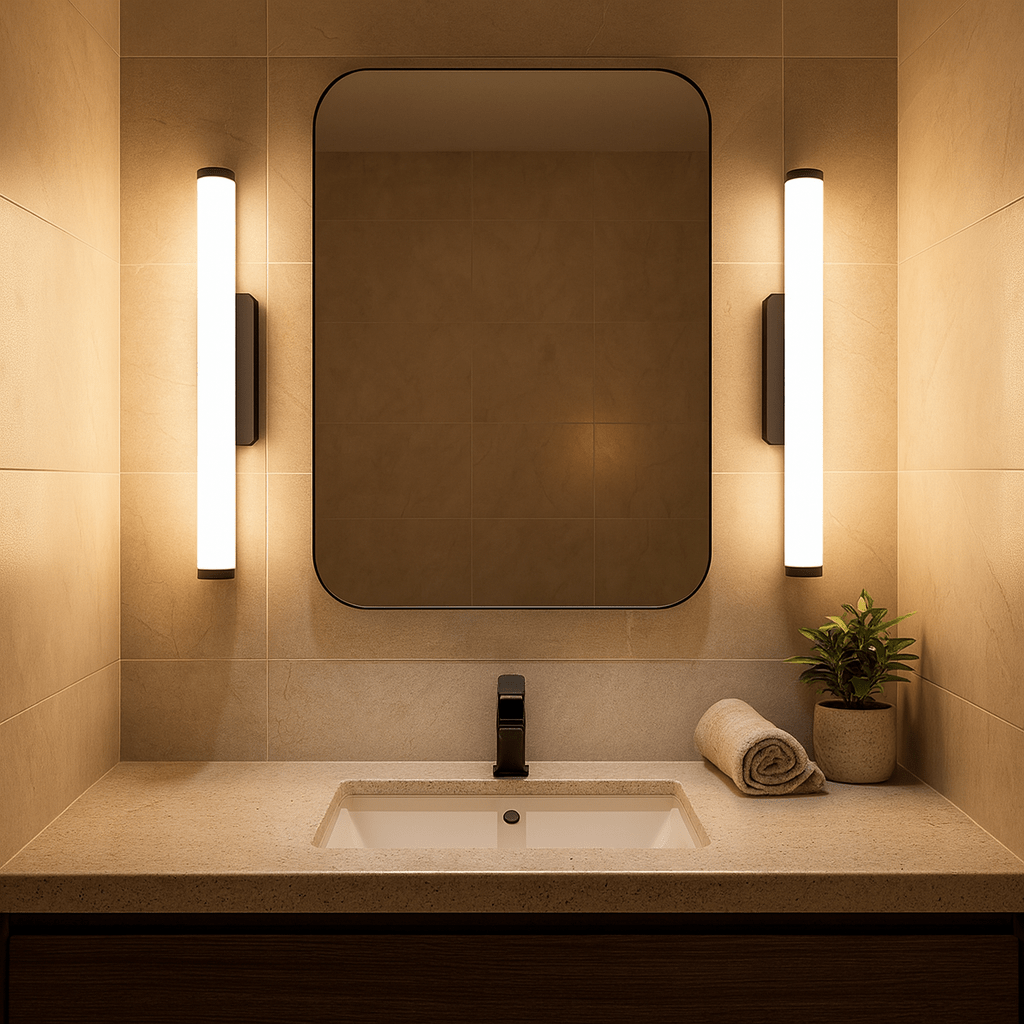
For most bathroom mirrors and grooming areas, 4000K Cool White is the strongest all-round choice. It provides a clean, balanced light that helps with everyday visibility without feeling as cold or clinical as a brighter Daylight tone.
3000K Warm White is useful where the wall light is mainly decorative or where a relaxed evening atmosphere is important. It works beautifully with timber vanities, beige tiles, brass fittings and warmer bathroom finishes.
6000K Daylight creates a crisp and energising effect. It can be useful where very bright visibility is wanted, but it may feel too stark in a calm spa-style bathroom. A 3-CCT wall light gives you the flexibility to choose between Warm White, Cool White and Daylight during installation.
| Colour Temperature | Best Use | Effect |
|---|---|---|
| 3000K Warm White | Relaxed bathrooms and decorative wall lighting | Warm, soft and calming |
| 4000K Cool White | Mirrors, vanities and daily grooming | Clean, balanced and practical |
| 6000K Daylight | Bright functional bathrooms | Crisp, bright and energising |
Should bathroom wall lights go beside or above the mirror?
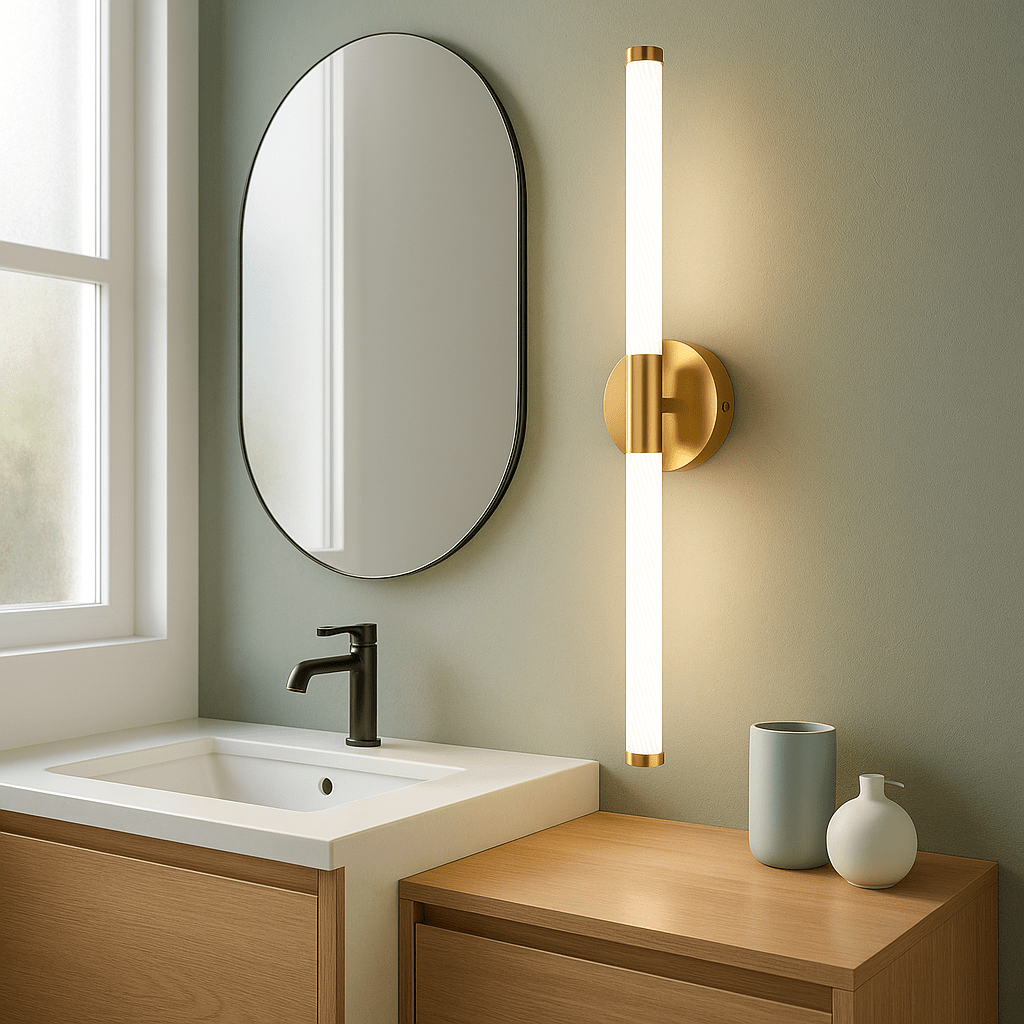
Wall lights beside the mirror generally provide the most even facial illumination, while an above-mirror light is often easier to fit into compact bathrooms. Both layouts can work well when the fitting size and position suit the mirror.
A pair of vertical sconces helps illuminate the left and right sides of the face. This is useful for makeup, shaving and skincare because the light is closer to eye level. It also creates an attractive symmetrical composition around the vanity.
A horizontal mirror light above the vanity is a strong option when the mirror sits close to a side wall or when there is not enough space for paired sconces. A longer fitting with a diffused output will generally provide better coverage than a small spotlight aimed down at the centre of the mirror.
- Side lights: Best for balanced facial illumination.
- Above-mirror lights: Practical for narrow vanities and compact bathrooms.
- Wide mirrors: Need a fitting with enough width and lumen output.
- Double basins: Consider separate lighting zones or one longer linear fitting.
- Decorative mirrors: Choose fittings that frame rather than overpower the shape.
How bright should a bathroom mirror light be?
A bathroom mirror light should be bright enough to illuminate the face clearly without producing uncomfortable glare. The required lumen output depends on the mirror size, room brightness, wall colours and whether the wall light is supporting other fittings.
A compact guest bathroom may only need a modest mirror light because the vanity is narrow and the user stands close to it. A large double vanity needs more output and wider distribution to prevent dark areas at the outer edges.
Diffusion is just as important as brightness. A frosted acrylic or polycarbonate diffuser softens the LED points and spreads the light more evenly. This usually produces a more comfortable result than a bright exposed source aimed directly at the face.
- Small mirror: Choose a compact fitting with controlled output.
- Large vanity: Use wider coverage and stronger lumen output.
- Dark tiles: May absorb more light than pale reflective finishes.
- Frosted diffusers: Help reduce harsh glare and visible LED points.
- Layered layout: Allows the mirror light to focus on grooming rather than lighting the full room.
Can decorative indoor wall lights be used in bathrooms?
Decorative indoor wall lights should only be used in bathrooms when their rating and construction suit the installation position. A fitting may look perfect beside a mirror but still be unsuitable for a humid or splash-prone location.
This is why shopping from a dedicated bathroom-lighting range is safer than assuming every indoor wall sconce will work. A bathroom-rated fitting is designed with moisture exposure in mind, while an IP20 decorative light is generally intended for dry interior rooms.
In a large bathroom with a clearly dry decorative zone, an electrician may be able to advise whether a particular fitting is suitable. Near basins, baths and showers, use fittings rated for the relevant bathroom zone.
How should bathroom wall lights be layered with ceiling lighting?
Bathroom wall lights work best as part of a layered lighting layout. The ceiling light provides general illumination, while the wall or mirror light handles grooming tasks. A softer third layer can be added through an LED mirror, niche lighting or concealed strip lighting.
This prevents one fitting from trying to do everything. A bright ceiling light alone may make the room visible but leave the face in shadow. A mirror light alone may illuminate the vanity beautifully while leaving the shower or floor area too dark.
For a practical family bathroom, combine an IP-rated ceiling light with a 4000K mirror light. For a more relaxed en-suite, add dimmable ambient lighting or a Warm White secondary layer for evening use.
- General lighting: Ceiling lights or bathroom-rated downlights.
- Task lighting: Wall lights, mirror lights or illuminated mirrors.
- Ambient lighting: Warm concealed lighting or dimmable accent fixtures.
- Night lighting: Low-level guidance light for late visits.
- Separate switching: Allows practical and relaxing lighting modes.
Which bathroom wall-light styles work best?
The best wall-light style is one that suits the bathroom finishes without reducing practical visibility. Slim linear fittings work particularly well in modern bathrooms because they sit neatly above mirrors and distribute light across a wide area.
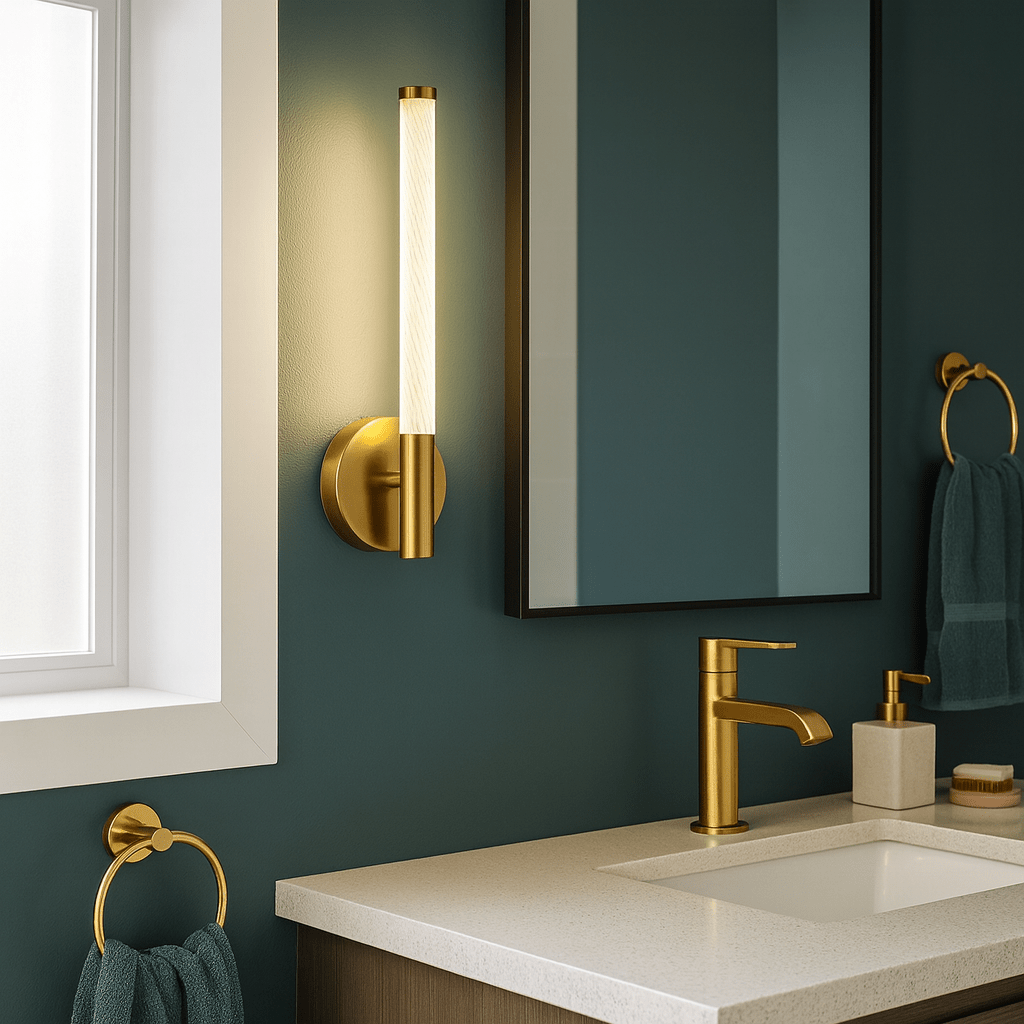
Chrome and polished aluminium coordinate naturally with many taps, shower frames and accessories. Matte black fittings suit contemporary bathrooms with dark hardware, while brass and gold tones add warmth to natural stone, timber and traditional interiors.
The light should complement the mirror rather than compete with it. A large decorative mirror may need a simple wall light, while a plain frameless mirror can support a more distinctive fitting.
- Modern minimalist: Slim integrated LED bars and clean geometric forms.
- Contemporary: Black, chrome or mixed-metal fittings.
- Coastal: Soft chrome, white and corrosion-conscious materials.
- Classic: Symmetrical sconces with diffused glass shades.
- Natural spa: Warm light paired with timber, stone and neutral finishes.
Are dimmable and smart bathroom wall lights worthwhile?
Dimmable bathroom wall lights are worthwhile when the bathroom is used for both bright morning routines and relaxed evening bathing. Full brightness supports grooming, while a lower level creates a calmer atmosphere after dark.
Compatibility must be checked carefully. The LED fitting, driver and wall dimmer must all support dimming. Installing a standard dimmer with a non-dimmable integrated LED light can cause flicker, poor performance or damage.
Smart control can add schedules, scenes and app-based adjustment, but the bathroom environment and electrical installation still need to remain suitable. Smart functionality does not replace correct IP protection or professional wiring.
- Dimming: Useful for shifting between task and ambient light.
- 3-CCT selection: Lets you choose the most suitable white tone.
- Smart scenes: Can create morning and evening lighting routines.
- Compatibility: Drivers, dimmers and controls must match.
- Safety first: Smart features do not change bathroom-zone requirements.
Bathroom wall-light buying checklist
- IP rating: Match the fitting to its bathroom zone and moisture exposure.
- Position: Decide whether the light will sit beside or above the mirror.
- Mirror size: Choose a fitting wide enough for the vanity.
- Colour temperature: Use 4000K Cool White for grooming or 3000K Warm White for ambience.
- Lumen output: Match brightness to the mirror size and room finishes.
- Diffusion: Frosted covers help create softer and more even light.
- CRI: A CRI of 80 or higher supports more natural colour appearance.
- Dimming: Confirm the fitting and control gear are compatible.
- Finish: Coordinate with taps, shower frames and bathroom hardware.
- Installation: Use a qualified electrician for compliant bathroom wiring.
Key takeaways
- Bathroom wall lights improve mirror visibility and reduce facial shadows.
- Side-mounted sconces provide balanced facial light, while above-mirror fittings suit compact layouts.
- IP44 fittings are commonly used for suitable damp and splash-prone bathroom positions.
- 4000K Cool White is the strongest all-round colour temperature for grooming.
- Frosted diffusers make bright LED mirror lights more comfortable.
- Wall lights work best when layered with ceiling and ambient lighting.
- Decorative indoor lights should not be used in bathrooms unless their rating suits the location.
- Bathroom wall lights should be installed by a qualified electrician.
Frequently asked questions about bathroom wall lights
What type of wall lights are suitable for bathrooms?
Choose wall lights with an IP rating suited to the installation position. IP44 LED mirror lights and moisture-resistant wall fittings are commonly used around bathroom vanities and grooming areas.
Where should bathroom wall lights be positioned?
Place wall lights beside the mirror around face level for balanced illumination, or centre a suitable linear fitting above the mirror where side space is limited.
Is 3000K or 4000K better for a bathroom mirror?
4000K Cool White is generally better for shaving, skincare and makeup because it gives clear, balanced visibility. 3000K Warm White creates a softer and more relaxed atmosphere.
Can bathroom wall lights be dimmed?
Yes, when the fitting, LED driver and dimmer are all compatible. Check the product specifications before adding a dimmer.
Are LED bathroom wall lights energy efficient?
Yes, integrated LED wall and mirror lights generally use relatively little electricity while providing useful task lighting and long service life.
Can an ordinary indoor wall light be used in a bathroom?
Only when its rating and construction suit the specific bathroom position. Do not assume an IP20 decorative indoor fitting is appropriate for a humid or splash-prone area.
Can wall lights be the only lighting in a bathroom?
They can light a small vanity area, but most bathrooms work better with layered lighting that combines wall or mirror lights with ceiling illumination.
Do bathroom wall lights need professional installation?
Yes, fixed bathroom lighting should be installed by a qualified electrician who can assess the bathroom zone, IP requirements and wiring safely.
Where can I buy bathroom wall lights in South Africa?
You can buy IP-rated bathroom wall lights, mirror lights, LED mirrors and ceiling fittings from Future Light online.
Conclusion
Bathroom wall lights are a practical upgrade that can make daily grooming easier while giving the room a more polished and considered appearance. They place useful illumination around the vanity, reduce the shadows caused by ceiling lights and help turn the mirror wall into a design feature.
The best fitting depends on the mirror size, bathroom zone and lighting effect you want. Choose 4000K Cool White for practical mirror lighting, consider 3-CCT when flexibility matters, and use an appropriate IP-rated fitting for the installation position.
Explore bathroom lights, browse LED mirrors, or compare LED ceiling lights at Future Light to create a balanced bathroom-lighting layout.
Continue your bathroom lighting research: Return to the bathroom lighting guide, compare indoor wall lights, or browse the bathroom lights collection.


