



Ah, summer in South Africa — where boerewors sizzles on the braai, lekgowa-friendly geckos dash across the patio lights, and sadly, mosquitoes are out in full force. If you’re like most of us, you're probably relying on a trusty mosquito lamp to keep the buzzing at bay while enjoying balmy evenings in Johannesburg, Durban or the bushveld.
At Future Light, we’ve had countless conversations with customers asking, “Do these mosquito lamps actually work?” It’s a valid question because many of us buy them with high hopes, only to swat more than we stop. After personally testing dozens of models (and getting bitten while doing it), we’ve got the lowdown on what really keeps those pesky vampiric insects from crashing your sundowner sessions.
Key Takeaways
- Mosquito lamps work best in enclosed or dark spaces, not wide-open patios.
- The UV light approach targets only specific mosquito species — not all.
- Placement is critical — ditch the corner and go close to where mosquitoes gather.
- Combining a lamp with motion sensor lighting amps up protection.
- Check CRI and CCT if you also want ambiance lighting with pest control.
- Consider solar-powered options for off-grid and eco-conscious control.

Understanding How Mosquito Lamps Work (and Don’t)
Not All Bugs Are Attracted the Same Way
In the wild world of insect control, especially here in sunny SA, knowing your enemy is half the battle. Most mosquito lamps rely on UV light to attract bugs — great if you’re tackling moths or fruit flies, not so great for the malaria-causing Anopheles mosquitoes common in Limpopo and Mpumalanga. These troublemakers hunt using body odour and CO₂ rather than just light.
We’ve had customers from the coastal suburbs of Ballito tell us that their bug zappers made short work of harmless gnats — but the mozzies? Still dancing around like it’s Ultra SA. Educating shoppers about species-specific behaviour is vital, which is why our insect control collection includes varied tech. For deeper entomological reference, check this study by the National Institutes of Health.
Most lamps emit UV light with a CCT (correlated colour temperature) of around 3500K. But for general ambiance, pairing them with a lamp that boasts CRI 80+ LED warmth lets you manage both bugs and vibes. Use a wide beam angle in dark corners where mosquitoes tend to hide. IP44-rated housings help survive drizzle and damp Jozi evenings.
Micro Summary: UV light only works for some bugs; mosquitoes are trickier and often resist normal zappers.

Placement Makes or Breaks Performance
You wouldn’t braai in a wind tunnel, so why hang a mosquito lamp in a breezy corner? In areas like Stellenbosch or the Bree Street rooftops of Cape Town, the open-air concept is great for hosting — but terrible for trap devices. Mosquitoes follow airflow and CO₂ trails, so placing your bug lamp away from human traffic zones (and closer to stagnant areas like bins or drains) actually works better.
The Future Light team regularly advises customers using solar outdoor lights or motion sensor wall lights to light up paths and nudge bugs toward their "glowy doom." Combine that with smart lamp placement and the results skyrocket. Trust EPA mosquito placement guides for extra confidence.
Mount your lamp 1.5 to 2 meters off the ground, away from human seating zones. If your unit has a directional beam, aim it toward vegetation or shaded spots. Bonus: integrated IP65 mosquito traps double as garden lighting with CRI-adjustable LEDs in cooler 4000K daylight.
Micro Summary: Position your mosquito lamp away from where people gather, near mosquito-prone areas at shoulder height.

The Power of Passive and Active Combos
Zappers alone often underperform when left to their own devices — literally. Think of them like the goalie without defenders. Combining your device with other lighting tricks greatly boosts effectiveness. That's why our Port Elizabeth clients often combine solar motion floodlights with mosquito lamps to steer insects where they want them gone.
One KZN holiday home integrated a warm 2700K LED bulb on their braai patio to draw in bugs, then installed a 4200K UV lamp to zap them out of sight. Using indirect lighted paths keeps humans safe and mozzies engaged — a sneaky win-win. The Entomology Today journal backs up this combo method.
Use motion lights rated IP66 for the unpredictable coastal rain. Stay in the 800 – 1000 lumen region with a CRI 70+ bulb and 120° beam coverage. Timer switches help automate mixture during high-activity summer evenings, perfect for stoep hangouts.
Micro Summary: Use multiple lighting methods (UV + warm LED + motion detection) for best mosquito-busting results.
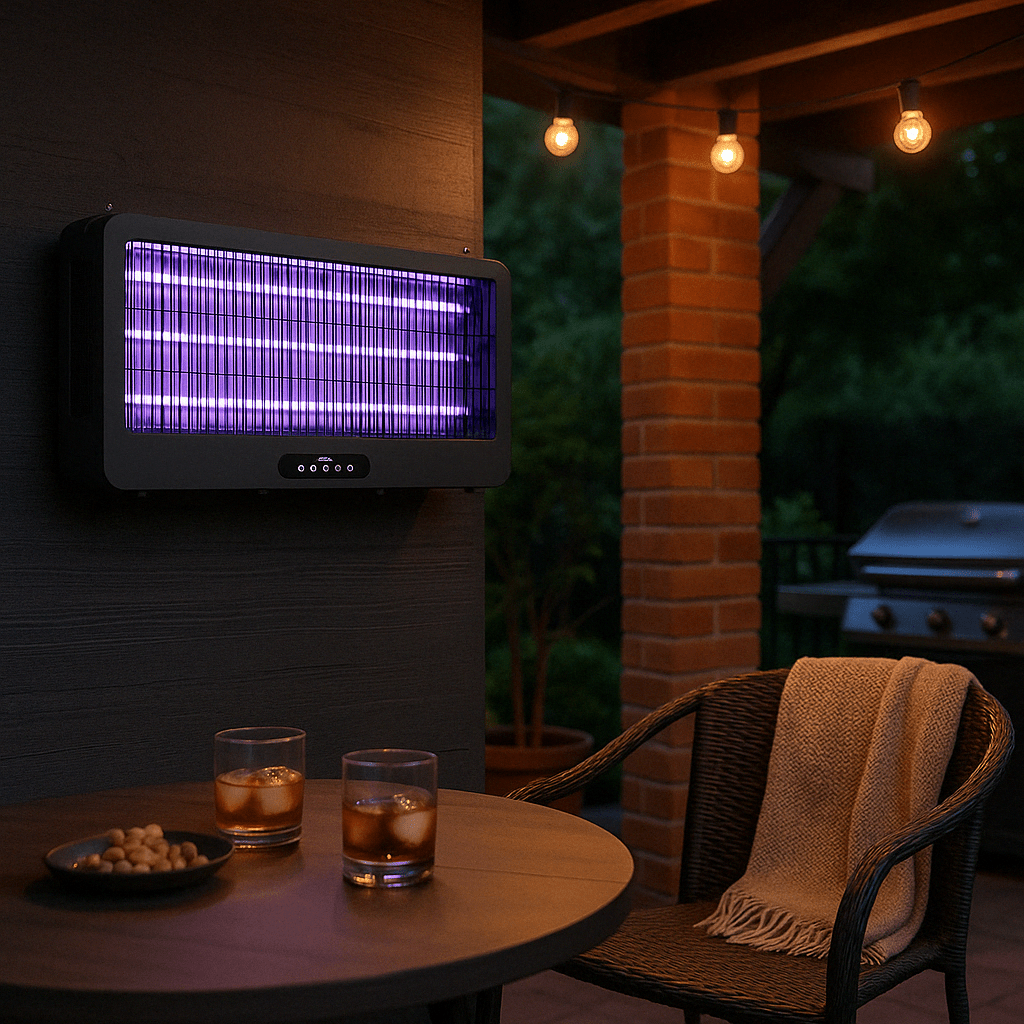
Understanding the science behind mosquito behaviour helps you use lamps better. Tech alone won’t solve it — but combined lighting strategies often do.
Choosing the Right Mosquito Lamp for SA Climates
Wattage vs. Coverage: What You Actually Need
In a compact flat in Cape Town’s Gardens area, a 5W mosquito lamp might do wonders. But try that in a hectare-sized plot in George, and you’re just entertaining the local insect population. Matching wattage to room/space size is crucial. Higher wattage doesn’t mean better capture — efficiency comes down to placement and environment.
One of our customers recently used a higher-watt 20W outdoor model from our camping light section at Kruger, paired with a rechargeable LED panel light to save energy. We even wrote about emergency lighting setups that pull double duty.
Indoor: Go with a 5–8W lamp, especially with wall lights in the 250-300 lumen range. Outdoor: Opt for 15W+ with IP54 or IP65 protection and dual-spectrum bulbs (UV + Yellow). Also, check beam shape: cylindrical lamps beat flat surfaces for 360° coverage.
Micro Summary: Scale wattage to use-case and surface area; overkill isn’t effective, and subtle sophistication wins.

Rechargeable and Solar Options Are a Game-Changer
Love a proper night of camping out near Worcester or mid-loadshedding in Bryanston? You're not alone. Our battery-powered and solar mosquito lamps have soared in popularity. They’re a green solution ideal for unpredictable Eskom supply or off-grid kpok-stages.
Future Light has helped families power through summer evenings using combo units that serve as both bug zappers and ambient bulbs. One gem in Knysna even used theirs for night lighting during loadshedding for their toddlers. External links like Greenpower South Africa promote eco-friendly mosquito management, a rising trend, especially in game reserves.
For full reliability, ensure you’re using a 3.7V lithium-ion battery with enough mAh (2600 and up). Look for 3000K-4000K lighting if used indoors too. IP-rated units help survive rainstorm or dew-glaze mornings on the Highveld.
Micro Summary: Solar or rechargeable units are perfect for off-grid mosquito control and eco-use in summer SA conditions.

When Style and Ambience Matter Too
Just because a light zaps bugs doesn’t mean it has to zap your dining area vibes too, né? Stylish table lamps with integrated bug repellents bridge function with form. Whether your patio is kitted with rattan furniture or a stylish boma setting in Pretoria, your mosquito lamp shouldn’t scream 'science lab'.
Recently, we shipped a chic dual-purpose lantern-style unit to a Clifton beach house featured in our camping lights special. The lamp blended with existing antique decor beautifully!
Match the lamp colour and CCT to surrounding decor: use 2700K warm white tones for wood-heavy patios, and keep CRI above 80 for accurate ambience. Beam spread under 90° focuses glow on gathered areas; plenty for bringing intimacy — minus bugs.
Micro Summary: Choose mozzie lamps that complement your interior or patio's aesthetics while quietly driving bugs away.

Mosquito lamps don’t have to be ugly or noisy. In 2024, they’re becoming part of stylish homes and energy-efficient summer fun.
Quick Checklist
- Use mosquito lamps in darker, closed-off zones.
- Combine with motion lights or LED strips for max control.
- Rechargeable or solar lamps save money and work off-grid.
- Match CCT and CRI to your space for comfort and luminance harmony.
- Choose an IP rating that suits your climate region.
Looking for bug control and beauty this summer? Browse our mosquito lamp collection, check out our favourite multi-use hero lamp, or explore our blog on multi-purpose lighting for versatile upgrades.
Frequently Asked Questions
Q1: Do mosquito lamps actually work in South Africa?
Yes, but effectiveness varies depending on the mosquito species, environment, and placement. They're best used in conjunction with other lighting strategies.
Q2: Can I use mosquito lamps indoors?
Absolutely. Choose models with lower wattage and warm CCT ranges (2700K–3000K) for calm indoor ambiance and controlled bug zones.
Q3: Are solar mosquito lamps effective during load shedding?
Yes! Solar mosquito lamps are ideal during load shedding, especially when paired with power banks or rechargeable lights.
Q4: What wattage is best for a backyard or patio area?
A 15–20W mosquito lamp generally offers ample coverage for most outdoor yards or patios.
Q5: Do mosquito lamps attract other insects?
Yes, most UV mosquito lamps attract other insects like moths or gnats, especially in high humidity zones.
Q6: Can I combine mosquito lamps with decorative lighting?
Definitely. Choose stylish dual-purpose units or pair with LED strip lighting to preserve aesthetic quality.
Q7: What’s the best IP rating for outdoor mosquito lamps?
Look for IP54 or higher to handle SA’s outdoor elements — especially in windier or damp areas.
Q8: Which tech is most mosquito-effective: UV or CO₂ traps?
CO₂ traps tend to target a broader range of mosquito species more effectively, especially the types found in South Africa.


